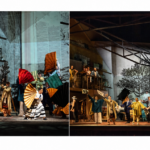

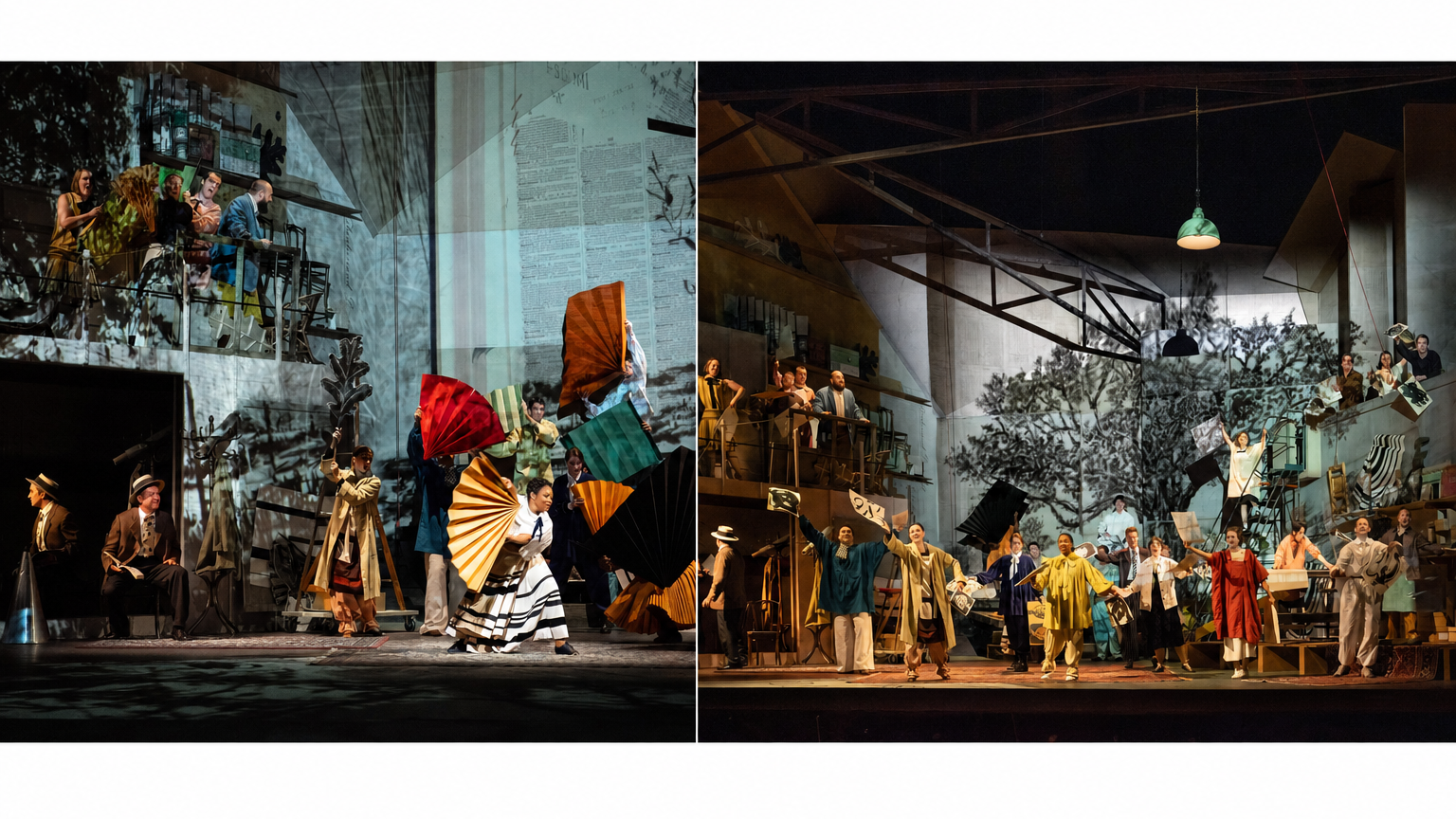


William Kentridge has directed a new staging of Claudio Monteverdi’s L’Orfeo for the Glyndebourne Festival that explores the passage of time as a fourth dimension alongside the three-dimensional canvas of the stage according to an interview published by The Art Newspaper on June 12 2026. The production which opened on June 14 received an enthusiastic audience response when it premiered at the Sussex venue with critics noting its use of video projections drawings and an artist’s studio setting that reinterprets the myth of Orpheus. Kentridge who is known for his charcoal animations and multimedia works collaborated with set designer Sabine Theunissen video designer Janus Fouché and choreographer Gregory Maqoma on the staging that runs through July 25.
Monteverdi’s L’Orfeo first performed in Mantua in 1607 is widely regarded as one of the earliest operas still in the standard repertory and concludes with the god Apollo granting Orpheus immortality and reuniting him with Eurydice in the stars a Glyndebourne introduction to the work stated. In this version the role of Eurydice is shared between soprano Francesca Aspromonte and dancer Roseline Wilkens whose movements add a physical dimension to the narrative while tenor Krystian Adam performs the title role. Conductor Jonathan Cohen led the Orchestra of the Age of Enlightenment in performances that featured period instruments including organ chitarrone violins cornetts and double harp.
Kentridge has built a significant reputation as an opera director since his first production more than two decades ago with stagings of works by Dmitri Shostakovich and Alban Berg presented at houses including the Metropolitan Opera in New York and La Scala in Milan The Art Newspaper reported. His 2016 production of Monteverdi’s The Return of Ulysses at Lincoln Center incorporated life-size puppets and video imagery derived from medical scans such as X-rays and MRIs a approach that drew praise from The New Yorker for its thrilling effect. Details of his L’Orfeo interpretation were kept secret ahead of opening but incorporated references to Rainer Maria Rilke’s Sonnets to Orpheus as well as Kentridge’s distinctive hand-drawn animations.
The production is a co-production with the Greek National Opera and the Metropolitan Opera and is scheduled to open the Greek company’s 2026-27 season at the Stavros Niarchos Hall in Athens on October 30 according to the Greek National Opera’s announcement. It represents the first time L’Orfeo has been staged at Glyndebourne and the festival debut for Kentridge whose visual language blends live action filmed elements and collage a Glyndebourne preview noted. Reviews in outlets including The Guardian highlighted Kentridge’s explosive creativity in bringing the music to life through its layered visual approach.
Glyndebourne Festival Opera was founded in 1934 by John Christie and his wife Audrey Mildmay with an initial focus on Mozart productions in a newly built theatre that seated 300 people according to the company’s official history. The festival has since grown to present more than 120 performances each summer reaching around 150000 audience members annually in a 1200-seat auditorium constructed in 1994 that replaced the original venue. It maintains two resident orchestras the London Philharmonic Orchestra and the Orchestra of the Age of Enlightenment and is the only major UK opera season without state subsidy Wikipedia entries on the festival confirm.
Kentridge described the work as being about the power of music and art to construct the world in comments reported by The Guardian on June 15 2026 during rehearsals. He noted the multiple time zones at play in the production spanning the opera’s 1607 origins its classical myth roots a 100-years-ago setting and the contemporary audience perspective. The staging has drawn mixed critical responses with some outlets such as The Times observing that the visual elements risk overwhelming the music while others praised the dynamic dialogue it creates with Monteverdi’s score.