


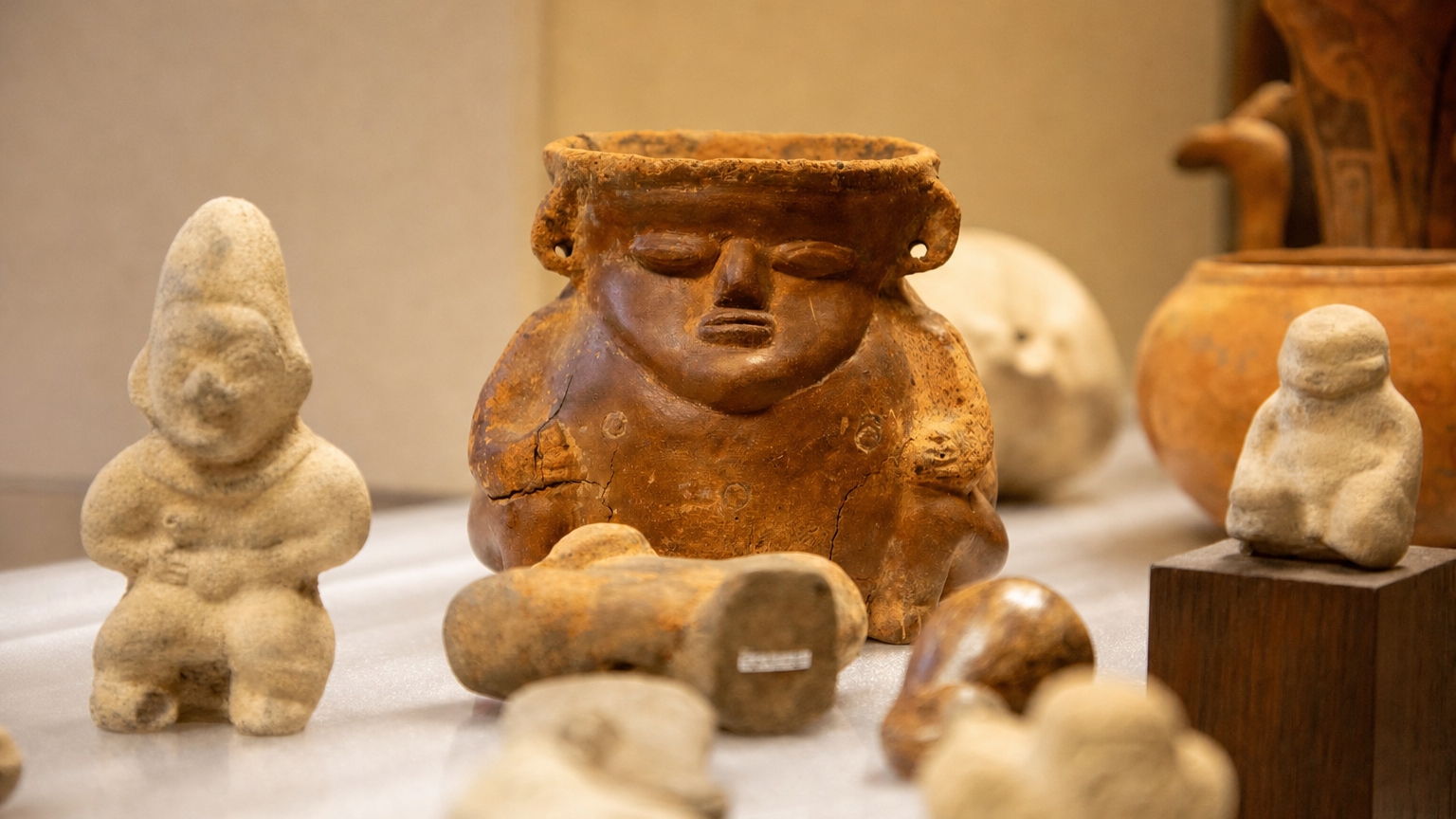


Bogotá’s Museo Nacional de Colombia has placed on public view for the first time 1,194 pre-Columbian artefacts repatriated since 2022, the institution reported. The exhibition titled Pasados en retorno. Repatriación del patrimonio arqueológico assembles ceramics, sculptures, funerary objects, anthropomorphic figures, necklaces and amulets linked to at least 14 archaeological regions across the country. Eighty percent of the pieces were voluntarily returned while the rest were seized from auctions or illicit trafficking networks through legal action, a Colombian Ministry of Culture assessment found. The display runs through August 23 and is co-organised with the Colombian Institute of Anthropology and History as well as the ministries of culture and foreign affairs.
The artefacts arrived primarily from the United States with 384 objects followed by Italy with 208, Chile with 174, Germany with 149 and Canada with 127, foreign ministry figures show. Smaller quantities came from the United Kingdom, France, Switzerland, the Netherlands, Peru, Costa Rica, Venezuela and New Zealand, according to the same tally. Colombian authorities transported many of the items using the presidential aircraft and the naval training ship ARC Gloria both to cut costs and to guarantee their security, the ministry stated in a release. The returns form part of a sustained diplomatic campaign that has made Colombia a reference point for heritage recovery in Latin America.
Colombia has repatriated more than 2,600 archaeological pieces from 17 countries since 2008, ICANH records indicate. The 1,194 artefacts recovered under President Gustavo Petro far surpass the seven items returned during the entire previous administration of Iván Duque, data published by El Tiempo reveals. Annual breakdowns show 354 pieces arrived in 2022, 210 in 2023, 316 in 2024, 137 in 2025 and 177 so far in 2026 mainly from Chile and Venezuela, Cancillería statistics confirm. These figures underscore a sharp acceleration in repatriation efforts compared with earlier governments.
Archaeologist Alexander Martínez said through repatriation processes the country has identified objects that were entirely unknown to us even here in Colombia. Their return allows study and display in their original cultural context, he added in an interview. The exhibition further spotlights two high-profile pending cases, the Quimbaya collection of 122 gold artefacts housed in Spain since 1893 and stone statues from San Agustín held by a museum in Berlin, museum background material notes. Colombian officials have formally requested the Quimbaya treasure’s restitution from Madrid, according to foreign ministry correspondence.

The National Program to Prevent and Counteract the Illicit Trafficking of Cultural Property, run by the culture ministry, coordinated the multi-year recoveries with international partners. Exhibition sections examine repatriation cases, global and national protective regulations and the operations of illicit trade networks, the organisers stated. Free admission on the final Sunday of each month has drawn large crowds since the June 26 opening, museum attendance records show. The artefacts will eventually support further research and some may return to regional museums closer to their places of origin.
Minister of Culture Yannai Kadamani Fonrodona described the returns as part of an ethics of decolonial policy aimed at restoring historical memory and identity. The pieces represent the diversity of societies and peoples that inhabited Colombia before the arrival of the Spaniards, she said. Such initiatives strengthen collective memory while advancing scholarly understanding of pre-Columbian techniques, trade routes and ritual practices, ICANH specialists noted in supporting documentation for the show.