
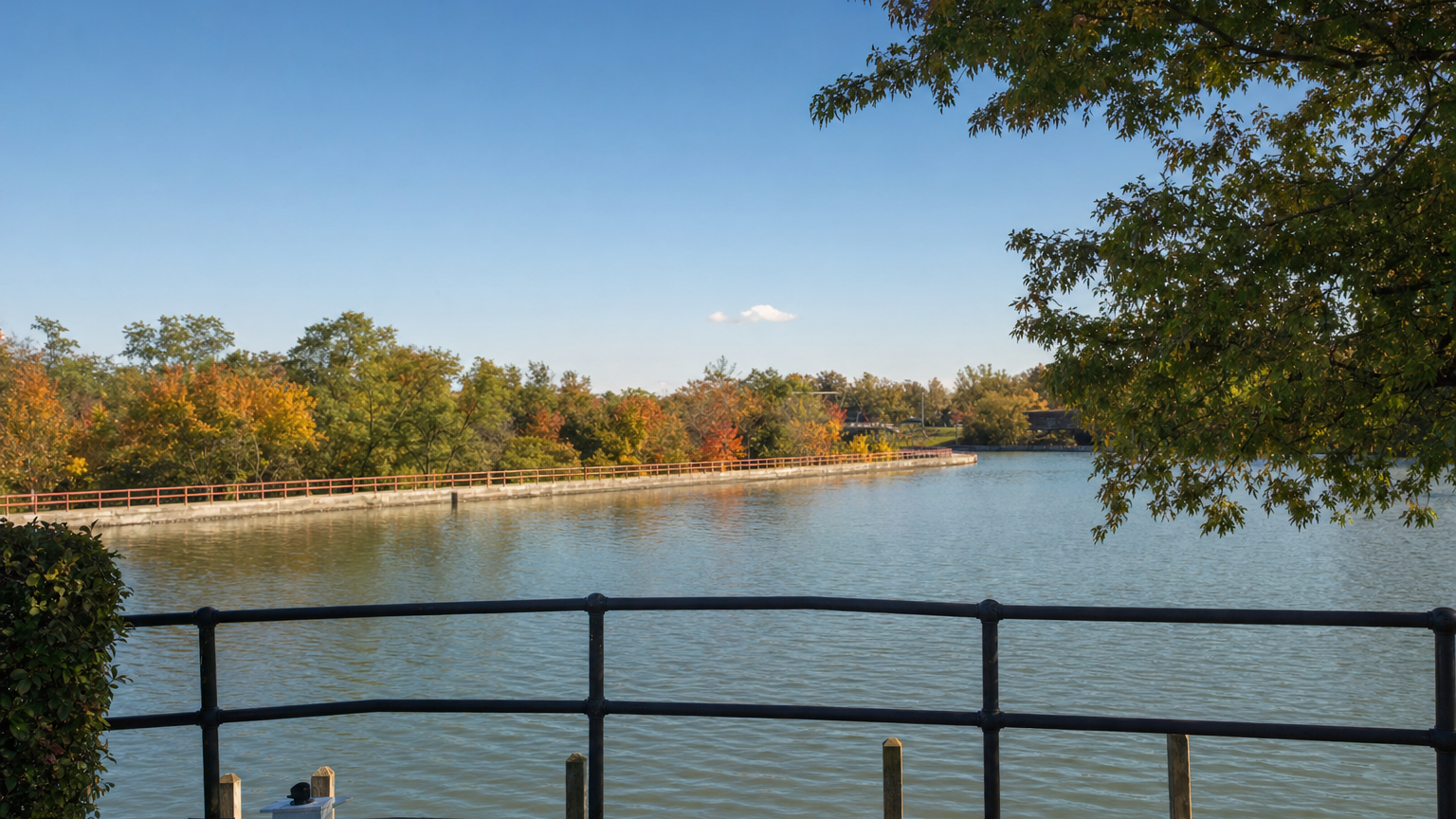


More than 100 works by 39 artists and collectives from five continents went on view across the village of Medina beginning June 6, 2026, under the title All That Sustains Us, according to the Medina Triennial organizers. The free exhibition spread through 10 sites within easy walking distance, including the historic Medina High School, Rotary Park, Sacred Heart Church, the YMCA, a railroad museum and a barge moored in the Erie Canal basin. Co-curators Kari Conte and Karin Laansoo commissioned many of the pieces to respond directly to the village’s sandstone architecture, its position along the canal and the practical realities of maintaining infrastructure in a rural community of roughly 5,900 residents.
The New York State Canal Corporation, a subsidiary of the New York Power Authority, launched the triennial as an element of a $300 million effort to increase tourism and recreational use along the Erie Canal after the waterway’s bicentennial in 2025, a New York Power Authority announcement stated. Organizers operated on a budget of less than $2 million drawn from regional foundations together with grants from Outset in the United Kingdom and the Mondriaan Fund in the Netherlands. Conte told The Art Newspaper that the project could serve as a model for other public agencies seeking to integrate contemporary art into non-traditional cultural settings.
Many of the displayed works addressed themes of ecology, repair, stewardship and collective responsibility, ideas that parallel the continuous labor required to sustain the 524-mile canal system, curatorial notes on the Medina Triennial website indicated. Artist Mary Mattingly created a floating garden on a canal barge that later departed for permanent display in New York City, labeled as Medina’s gift to the metropolis, according to post-exhibition reports in the Orleans Hub. Other participants included Ash Arder, Selva Aparicio, James Beckett, Asad Raza and the duo Richard Ibghy and Marilou Lemmens, all of whom produced site-responsive installations or collaborated with local residents during year-long research periods.
By the time the exhibition closed on September 7, 2026, the Medina Triennial had drawn thousands of visitors from 32 states and multiple foreign countries, the Orleans Hub reported on September 3. Final-weekend programming featured artist talks, curatorial tours and conversations tied to specific works, including a discussion of James Beckett’s digital quarrying project with a University at Buffalo architecture professor. Attendance figures underscored the event’s success in bringing international attention to a village that lies roughly 45 minutes by car from Buffalo or Rochester and two and a half hours from Toronto.
US Census Bureau figures place Medina’s 2024 population at 5,912, with a median household income of $59,231 and a demographic profile that is 89 percent White. The village holds five landmarks on the National Register of Historic Places and has experienced a noted culinary and cultural revival in recent years, according to regional coverage in the Buffalo News. Organizers designed the triennial to recur every three years, establishing long-term artist residencies and public programs that position small-town geographies as venues for critical contemporary practice.
Some installations will remain in Medina while the barge garden continues its journey along the canal, stopping at other communities before reaching New York City, Kari Conte explained in a September 20 Orleans Hub article. The project repurposed or sold nearly all materials, in keeping with its thematic focus on sustainability and maintenance. A dedicated Triennial Hub at 345 Main Street now serves as a year-round center for workshops, talks and community gatherings built with reclaimed Erie Canal wood.