


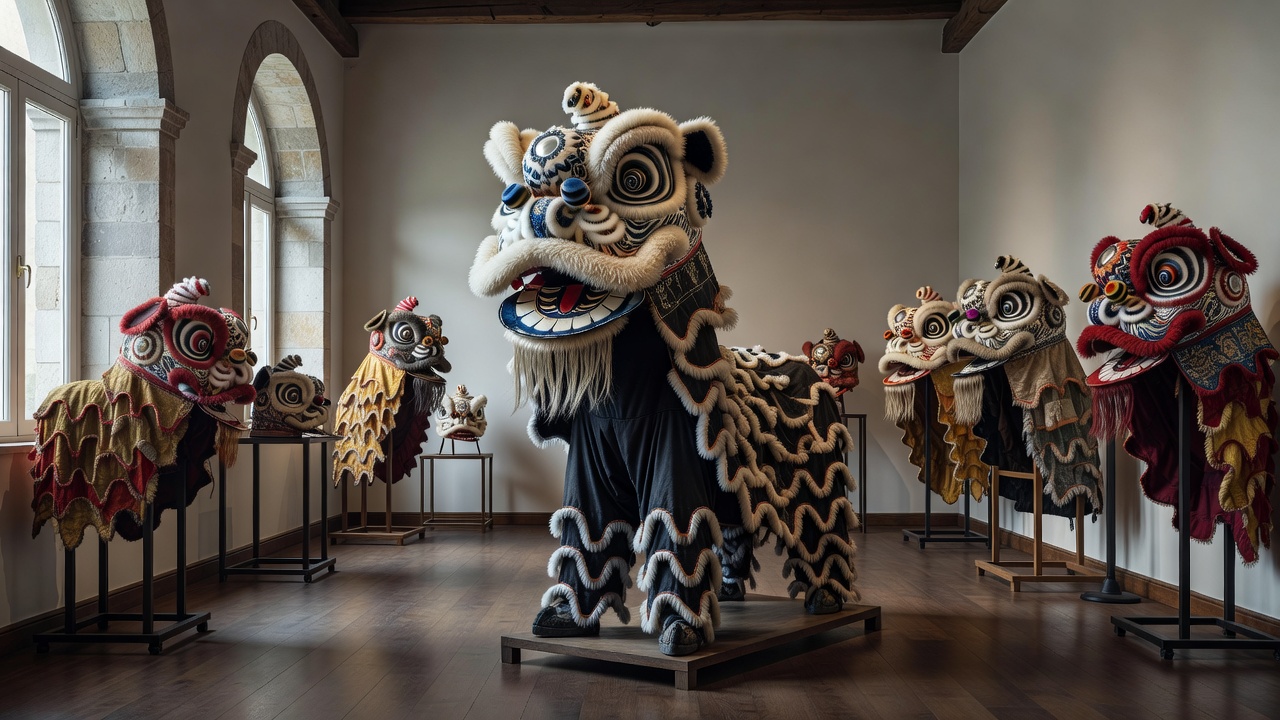


The Lion Dance in Art local lion dance culture exhibition opened at Tai Kwun in Central on October 31, 2026, drawing crowds that included citizens, students, cultural enthusiasts and members of the lion dance community. Organised by the Student Affairs Office of the Hong Kong Polytechnic University’s School of Professional and Continuing Education with the Luk Chi Fu Martial Arts Association as co-organiser, the show assembles multiple century-old artifacts to highlight both celebratory and solemn dimensions of the tradition. According to exhibition materials, the centrepiece is an extremely rare filial lion, known also as a mourning or spirit lion, which until now had not been displayed publicly.
Exhibition information states that the filial lion appears exclusively at funerals of highly respected martial arts masters or community elders, serving as the highest form of respect and farewell. Cultural accounts describe these lions as featuring a muted palette of white, black and blue with solemn, restrained movements that contrast with the energetic performances seen at festivals and business openings. A 2014 paper in Asian Sports Science noted that such funeral lion dances in southern Chinese communities function to console the deceased, ward off impurities and extend blessings to the family.
Tai Kwun visitors encountered additional historical pieces, including a lion costume that performed at a 1970s World Expo in Japan, according to the display descriptions. The exhibition also features a replica lion used in an eye-dotting ceremony during Princess Anne’s visit to Hong Kong and a replica kylin that took part in events marking the inauguration of former Governor David Trench. These items trace the evolution of lion dance practices in Hong Kong from the post-war period through the colonial era.
Lion dance itself traces roots to the Tang Dynasty more than a thousand years ago, when performances symbolised power and protection against evil spirits, an assessment found in historical reviews published by the Association for Asian Studies. In Hong Kong the art flourished after craftsmen arrived from Guangdong, blending with local martial traditions and gaining prominence in both community celebrations and ritual contexts. The current exhibition seeks to broaden public understanding by presenting the mourning lion alongside these festive elements.
Organisers reported that many attendees expressed surprise upon learning about the funeral role within lion dance culture, which is often associated solely with joy and good fortune. The filial lion’s public debut underscores the tradition’s deeper ties to Chinese values of filial piety and respect for teachers, themes echoed in accounts from lion dance practitioners across the region. Supporting research from Nirvana Asia has detailed how these lions undergo specific consecration rituals with incense, pomelo leaves and holy water before performing at memorials.
The three-day exhibition concluded on November 1 after offering workshops and interactive sessions that allowed participants to examine the craftsmanship behind the artifacts. Attendance figures reflected strong interest from younger generations and martial arts groups keen to connect with intangible cultural heritage. Similar displays in past years have contributed to renewed appreciation for lion dance as both performance art and living tradition in Hong Kong.