


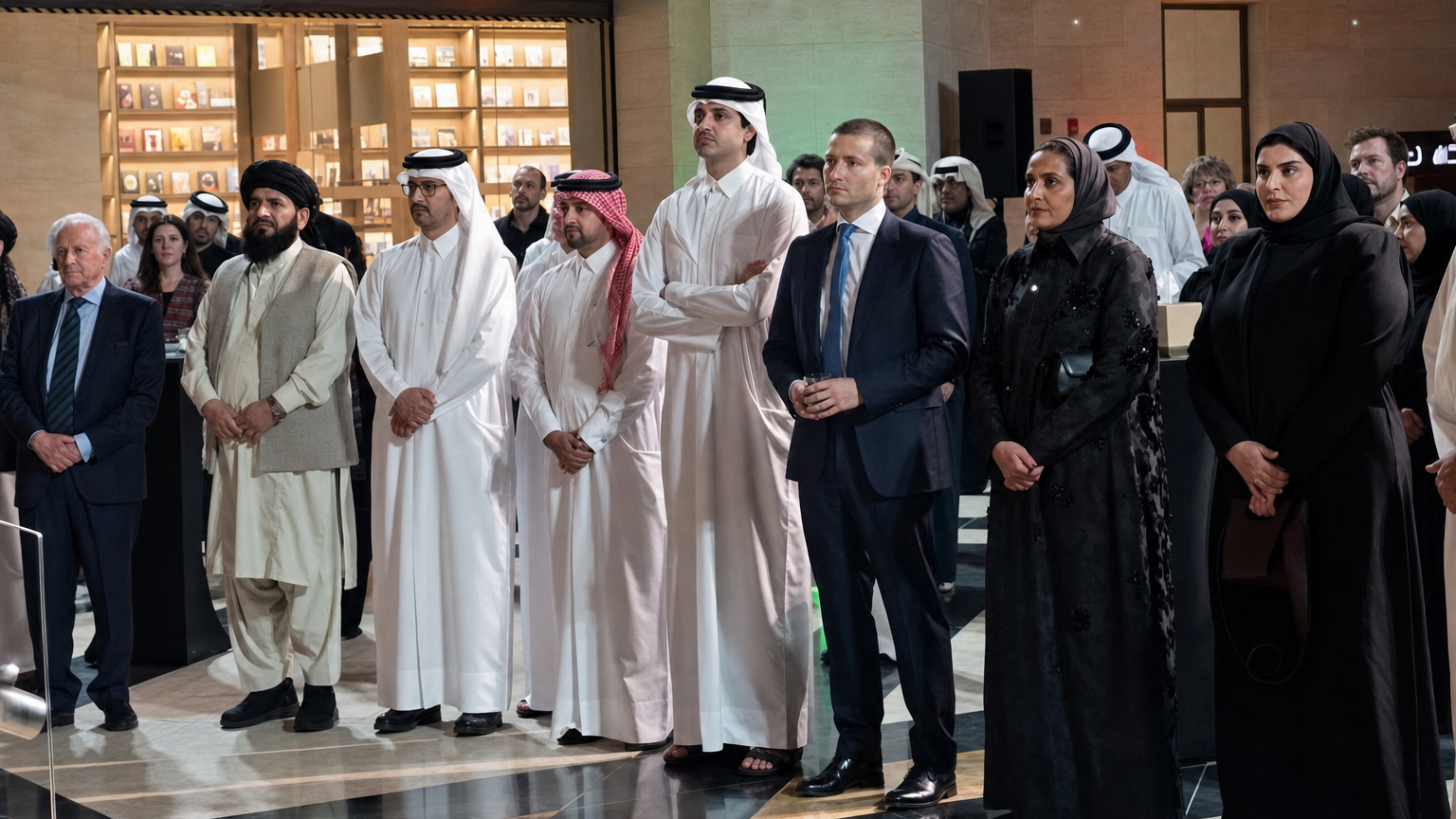


The exhibition at the Museum of Islamic Art was inaugurated by Sheikha Al Mayassa bint Hamad bin Khalifa Al Thani in the presence of Prince Aly Muhammad Aga Khan and officials from the Aga Khan Trust for Culture. Curated by Nicoletta Fazio and Thomas W. Lentz, the show draws primarily from the museum’s holdings while incorporating loans and modern works to illustrate Afghanistan’s role as a historic crossroads of cultures, religions and trade routes. According to materials distributed by the Aga Khan Development Network, the display emphasises continuity from pre-Islamic civilisations through Islamic eras to the present day and includes large-scale models of monuments crafted by trainees at the trust’s vocational centre in Kabul.
Nearly 150 archaeological finds, manuscripts, textiles, metalwork and contemporary pieces fill the Sheikh Saoud Al Thani Temporary Exhibitions Gallery, a museum assessment found. Among the highlights is an early 13th-century brass ewer from Herat with silver and copper inlay alongside a ninth-century Qur’an folio in kufic script, The Art Newspaper reported on February 6. The Aga Khan Trust for Culture, which has supported heritage projects in Afghanistan since 2002, contributed the wooden architectural models that demonstrate traditional craftsmanship and ongoing conservation work.
One model depicts the Noh Gunbad mosque, regarded as the oldest Islamic building in the eastern Islamic lands and constructed atop an earlier Buddhist site. Curator Nicoletta Fazio said, “Noh Gunbad dates to latest the early ninth century and is built on a previous sacred site related to Buddhism. This shows continuity in religious practices and the memory of sacred landscape, which is specific of Afghanistan.” The museum’s presentation places the structure within broader patterns of layered sacred spaces that have defined Afghan cultural memory for centuries.
Five thematic sections structure the exhibition, beginning with Afghanistan at the Crossroads of History that examines influences from early empires through archaeological objects, glassware and luxury textiles. A subsequent gallery titled The Eastern Frontier charts the arrival of Islam from the mid-seventh century onward to the Mongol period, displaying manuscripts, jewellery and wall paintings that reflect courtly and religious life. The show continues with sections on Timurid Herat in the 15th century, when the city became a centre of intellectual and artistic production, according to curatorial notes released by the Museum of Islamic Art.
Later parts address Afghanistan in the modern era, including colonial encounters and the emergence of the contemporary state, while integrating video installations and works by living artists such as Kiana Hayeri. Luis Monreal, general manager of the Aga Khan Trust for Culture, stated that the collaboration with Qatar Museums had made possible an overview of two millennia of cultural and architectural development alongside the skills of present-day Afghan artisans. The exhibition formed part of programming tied to Art Basel Qatar week and has drawn international attention for its focus on preservation amid decades of conflict.
Shaika Nasser Al Nassr, director of the Museum of Islamic Art, described the project as an opportunity to present Afghanistan’s history as a tapestry of creativity and resilience. The display avoids reducing the country to recent geopolitical narratives and instead foregrounds its contributions to global artistic traditions through objects that have survived centuries of movement and exchange. Museum figures show visitor interest has remained strong since the February opening, with the exhibition scheduled to close on May 30.