


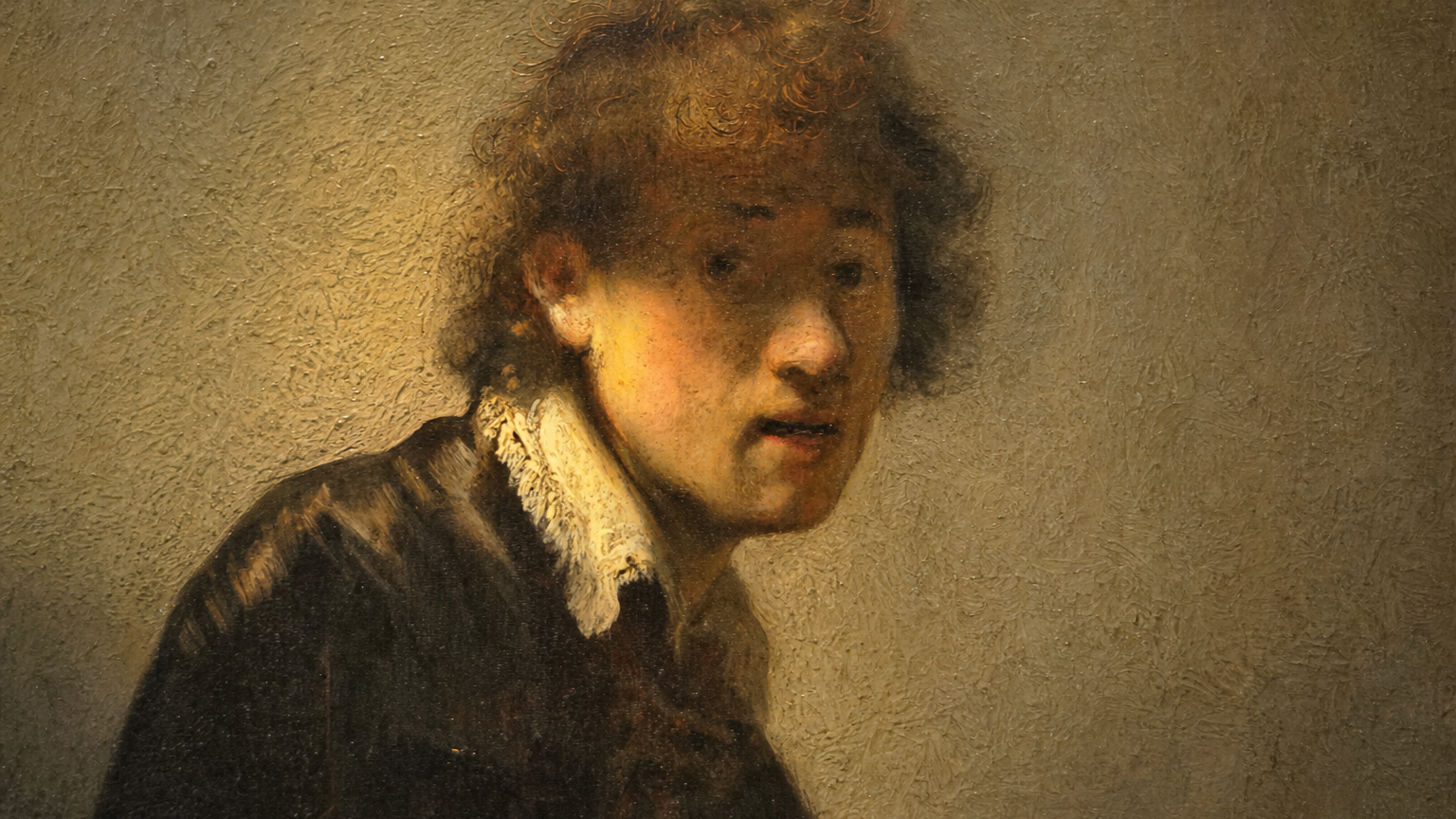


The Art Newspaper reported on 3 September 2026 that a self-portrait by Rembrandt painted in 1629 is returning to Gotha on loan from Munich’s Alte Pinakothek for an exhibition opening two days later. The work, known as Youthful Self-Portrait, had been removed from the Ducal Museum in 1946 and has not been displayed in the Thuringian city since. It will form the centrepiece of Rembrandt 1632: The Creation of a Brand, which runs at the Herzogliches Museum until 6 December. The exhibition was previously presented in association with Hessen Kassel Heritage.
Exhibition materials from the Friedenstein Foundation explain that this period marked Rembrandt’s transition from his native Leiden to Amsterdam, where he began to establish his distinctive brand. The show’s title refers to his decision to sign works solely with his first name, emulating iconic predecessors. This choice helped position him as a singular figure in the competitive Dutch art market of the 17th century, curators have noted in exhibition materials. The self-portrait depicts the artist at age 24 with disheveled hair emerging from a dark background.
The painting’s removal occurred when the museum director at the time smuggled it to the American-occupied zone to prevent it from falling under Soviet control in what became East Germany, The Art Newspaper reported. It later entered the Bavarian state collection and has been housed at the Alte Pinakothek ever since. Gotha has long contested the legality of the 1946 transfer, viewing it as an illicit act amid the chaos of postwar Germany. The current loan does not alter ownership but represents a significant gesture of cooperation between the two German states.
Gotha’s mayor, Knut Kreuch, set the loan in motion by reaching out to Bavarian minister-president Markus Söder, prompting diplomatic negotiations at senior levels. Both institutions have since expressed satisfaction that the arrangement allows public viewing while preserving their respective legal positions. The Friedenstein Foundation, which oversees the Ducal Museum, described the development as a milestone achieved through careful diplomacy. This marks the painting’s return to the site of its former long-term display in the palace complex.

The Herzogliches Museum, built between 1864 and 1879 adjacent to Schloss Friedenstein, will host the exhibition in its dedicated hall, according to the foundation’s documentation. The show assembles 11 authenticated Rembrandt paintings along with more than 80 additional works by pupils, contemporaries and in various media. Specialists from the Rembrandt Research Project have verified the core attributions, lending scholarly weight to the presentation. The inclusion of the 1629 self-portrait provides a chronological prelude to the 1632 focus, illustrating the artist’s evolving self-image.
Rembrandt is estimated to have created between 40 and 50 painted self-portraits over his career, according to experts at the Rembrandt Research Project, making such works central to any examination of his oeuvre. This particular example from his youth adds depth to understandings of how he cultivated his public persona from the outset. The exhibition’s emphasis on branding offers fresh perspectives on 17th-century art commerce and celebrity. Visitors to Gotha will have the opportunity to see the disputed masterpiece in its historical context through early December 2026.