


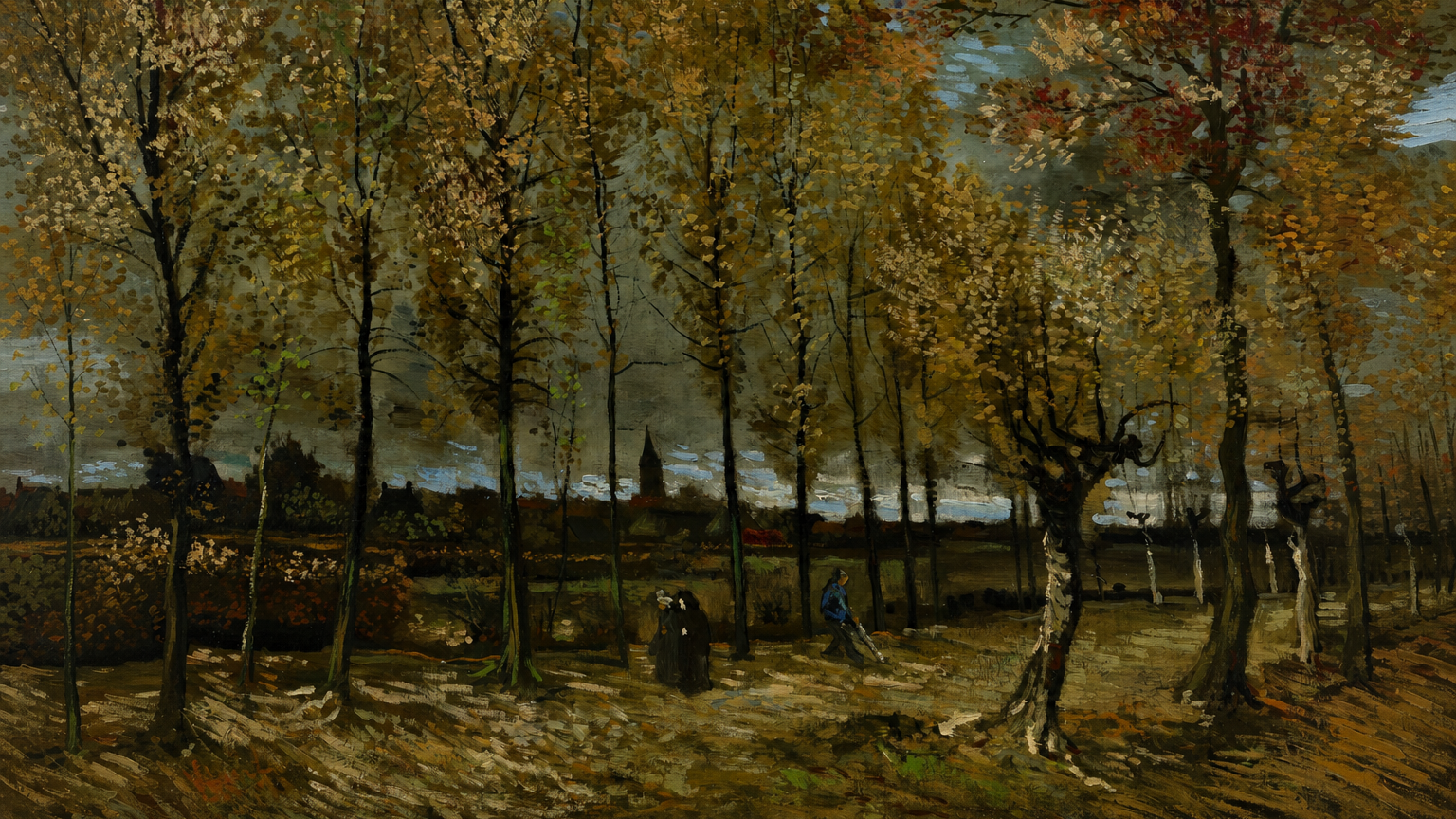


A four-year conservation project at the Boijmans Van Beuningen Museum in Rotterdam has uncovered that Vincent van Gogh’s Poplars near Nuenen contains three distinct compositions on the same canvas. X-ray and infrared imaging revealed the silhouette of a church tower with its original spire and cemetery crosses beneath the visible poplar avenue and three walking figures according to the museum’s technical analysis. The initial work from 1884 depicted a moonlit view of the Protestant church in Nuenen near the site where the artist’s father would be buried months later.
Van Gogh painted over this scene in November 1885 to create the current autumn landscape the museum reported. In late 1886 while in Paris he reworked sections with brighter pigments not typically used during his Nuenen period including cerulean and cobalt blues strontium chromate and cadmium yellows emerald and viridian greens and organic reds. These changes focused on the pathway leaves sky and upper areas to introduce more light thicker impasto and a composition aligned with his emerging Impressionist influences the conservation assessment found.
The Paris additions proved far more extensive than long assumed Sandra Kisters the museum’s director of collections and research said in a statement. “The additions made in Paris in 1886 have turned out to be much more consequential than we thought” Kisters stated. This confirmation validates a letter from collector Andries Bonger that specialists had previously discounted due to the 14-month gap between the main versions.
Macro X-ray fluorescence scanning and micro-sample analysis enabled precise mapping of the layers and pigments the Boijmans Van Beuningen Museum explained. Earlier studies have indicated that Van Gogh reused canvases in roughly one third of his early works often due to financial constraints according to technical research published by institutions including Delft University of Technology. The findings on this painting add detail to the artist’s transition from the Netherlands to France during a period of evolving style and palette.
Conservation work also identified unexplained linseed oil drips across the surface that were not applied by the artist himself the museum’s restorers reported. An intermediate egg-white layer applied by Van Gogh required careful navigation to protect underlying paint while removing discoloured varnish and addressing cracks. The multi-year effort has restored the vibrancy of the autumn colours that had been muted for decades.
The refreshed painting is now displayed in the museum’s Depot alongside technical images that allow visitors to explore the hidden layers the Boijmans Van Beuningen Museum said. This presentation follows completion of the restoration and offers new insights into Van Gogh’s iterative process on a single support. Similar discoveries in other works have relied on comparable non-invasive scanning techniques developed in recent decades.