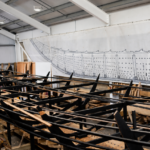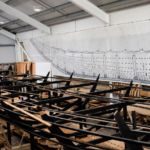



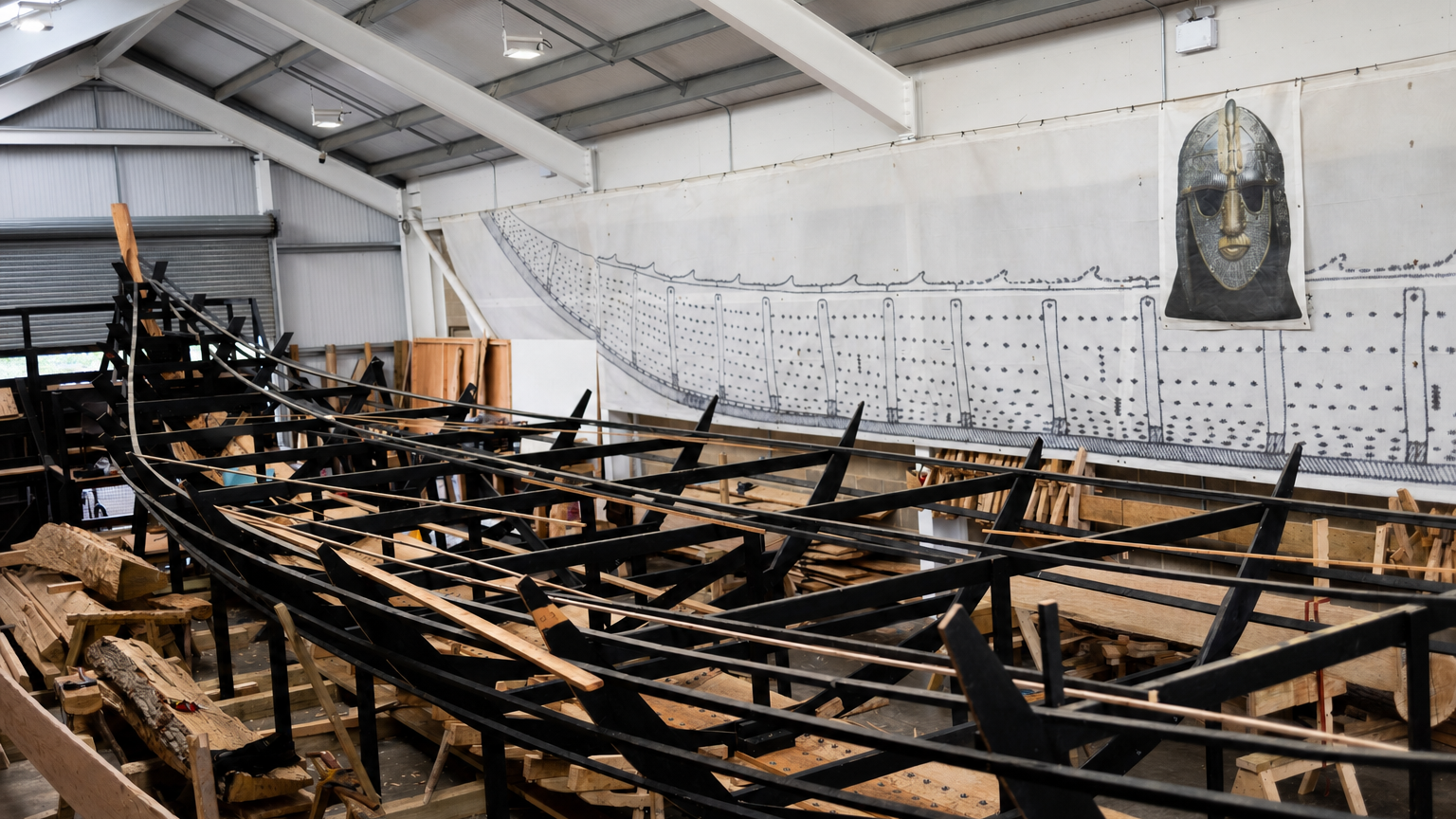


The Sutton Hoo Ship’s Company reported in August 2026 that work on the full-scale replica has reached a point where the hull structure has taken clear shape inside the Longshed workshop in Woodbridge. Volunteers have continued processing large oak timbers from estates including Whiligh and Dinefwr while fitting internal framing and preparing the sheer strake planks. The project which began in 2016 employs only traditional materials and techniques to test theories about Anglo-Saxon shipbuilding according to the organisation’s monthly updates.
Construction has involved cleaving and shaping oak sections for the overlapping planks which are fastened with thousands of hand-made iron rivets and roves. The Worshipful Company of Ironmongers provided a grant to support production of the ironwork with one of its representatives contributing a rivet during a site visit. Internal framing elements have been fashioned and readied for trenail fixings as the build moves toward completion of the nine strakes of planking the Sutton Hoo Ship’s Company stated.
The vessel is scheduled to launch in May 2027 powered by 40 volunteer rowers if conditions allow according to the reconstruction team. The project spends around 250000 pounds annually and functions primarily as an experimental archaeology effort rather than a static exhibit. After the planned launch attention may shift to a second replica based on the Snape ship found in the same region the group indicated.
Basil Brown discovered the original Sutton Hoo ship impression in 1939 while excavating a mound on Edith Pretty’s estate the British Museum records show. Acidic soil had destroyed all timber leaving only iron clench bolts that outlined a 27-metre-long vessel with a burial chamber at its centre. Pretty donated the recovered treasures to the nation after a coroner’s inquest confirmed her ownership under treasure trove law.

The British Museum holds the artefacts from the burial which include a helmet decorated with garnets and gold shoulder clasps Byzantine silverware and a whetstone sceptre. Phosphate traces in the soil confirmed that a body had been present though it had fully decomposed. Historians associate the early seventh-century grave with Raedwald king of East Anglia though no inscription identifies the individual.
The National Trust has managed the Sutton Hoo site since 1999 and partnered with the reconstruction team while hosting recent excavations by Time Team in 2024 and 2025. Those digs in Garden Field uncovered additional features that complement the ship project and the visitor centre displays. The site attracts hundreds of thousands of visitors each year drawn by the connection to the Anglo-Saxon world revealed through the original finds.