


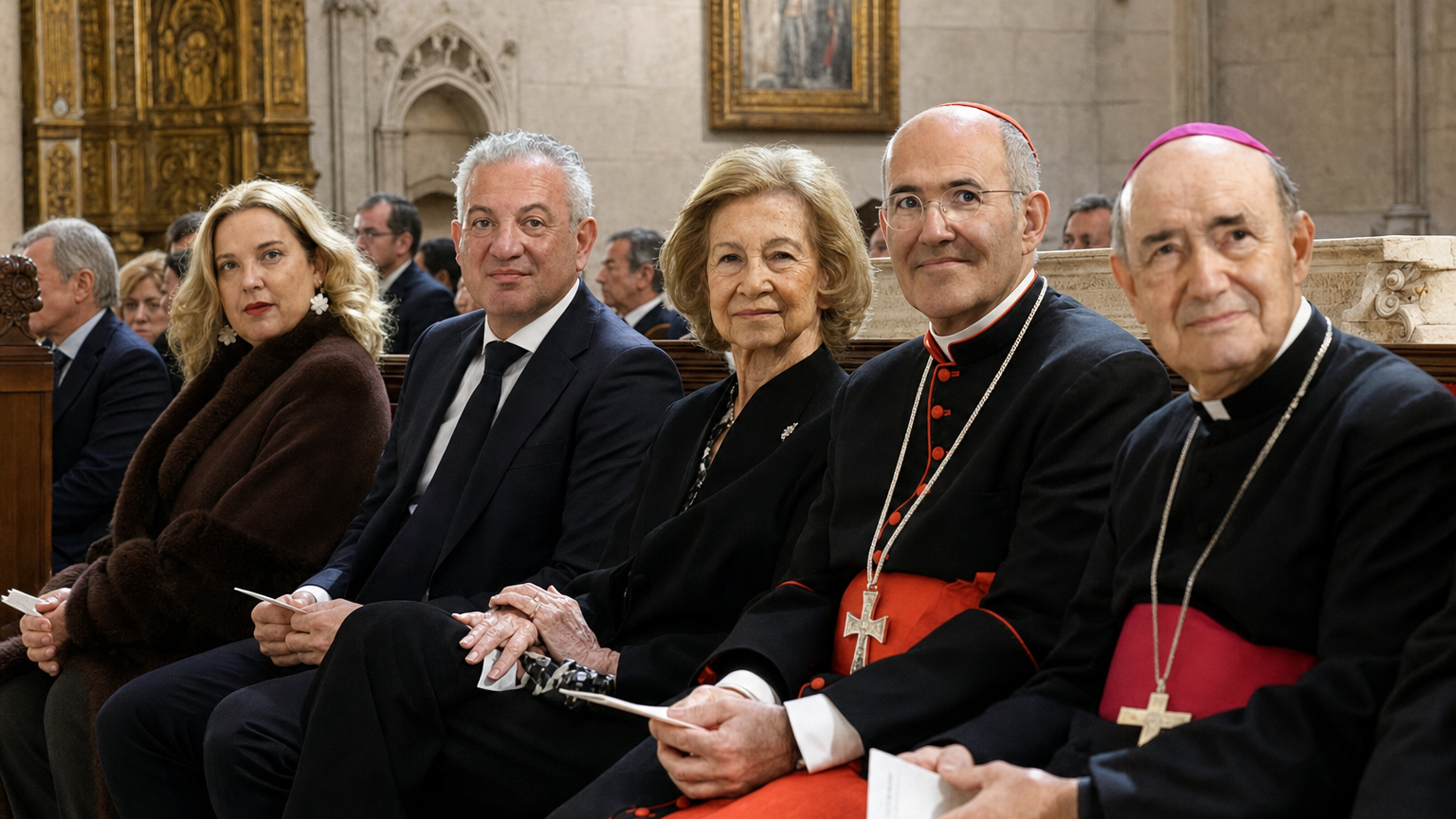


The exhibition marks the first time a major display of Pablo Picasso’s art has been held inside a cathedral, curator Paloma Alarcó told The Art Newspaper. It occupies the Beato Valentín Palencia Hall and adjacent spaces in the 13th-century Gothic building that Picasso visited with his first wife Olga Khokhlova and son Paulo during his final journey to Spain in 1934. The opening on March 2 drew Queen Sofía, Cardinal José Tolentino de Mendonça as prefect of the Vatican’s Dicastery for Culture and Education, and the artist’s grandson Bernard Ruiz-Picasso, the Archdiocese of Burgos reported.
Alarcó, who heads modern painting conservation at the Thyssen-Bornemisza Museum, described Picasso as an atheist who was very pious and noted that he always had spirituality distinct from dogma. Despite the artist’s decision to break from his Catholic upbringing, his oeuvre remained steeped in memories of the church in which he was raised, according to the curator. The display is organised into six thematic sections that trace these influences from his early religious education through meditations on suffering, mortality and hope, exhibition materials show.
The Fundación Almine y Bernard Ruiz-Picasso for Art provided 31 of the 44 works, with additional loans from the Reina Sofía, Thyssen-Bornemisza and Picasso museums in Barcelona, Málaga and Paris, a statement from the organisers said. Early pieces include The Altar Boy from 1896, which depicts a young acolyte during liturgy and reflects training under devotional painter José Garnelo Alda, whose naturalistic style shaped Picasso’s first large-scale religious works such as First Communion. Maternity from 1921 presents his wife and infant son in a composition that closely resembles traditional Virgin and Child imagery, the catalogue notes.
The strongest examples emerge around the lead-up to the Second World War, with The Crucifixion from 1932 drawing on a Renaissance altarpiece to convey global threats at the time, according to Alarcó. A 1937 drawing titled Mother with Dead Child II, produced as a postscript to Guernica, adopts a Pietà-like pose, while repeated dove motifs reference the Noah narrative as emblems of hope and renewal, the exhibition organisers stated. Cardinal Tolentino de Mendonça observed that for Picasso the Bible formed a profound structure of sensibility forged in childhood liturgy and sacred imagery, a Vatican account recorded.
The cardinal further characterised Guernica as perhaps the greatest religious painting of the 20th century because it unveils the human condition without any veil, drawing on the rhetoric of sacred iconography to articulate pain and sacrifice. Art historians Jane Daggett Dillenberger and John Handley explored similar themes in their 2014 book The Religious Art of Pablo Picasso, documenting how the artist repeatedly returned to crucifixion imagery as a symbol tied to Spanish identity, bullfighting and renewal even after declaring himself atheist. Later works on view include the 1961 bronze Man with a Lamb, evoking Christ the Good Shepherd, and vanitas still lifes featuring skulls that echo 17th-century traditions on mortality.
Ruiz-Picasso emphasised at the opening that however a life unfolds something of the past always remains, blending with his grandfather’s deep attachment to Spain and commitment to peace, The Art Newspaper reported. The exhibition, which also features charcoal drawings such as The Family from 1920 showing a family leaving church on Christmas Day, runs through June 29 and is open daily from 9:30am to 6:45pm. It seeks to illuminate the generative tension between Picasso’s secular outlook and the enduring symbolic power of biblical and Christian tradition that shaped his visual language, according to the curator.