


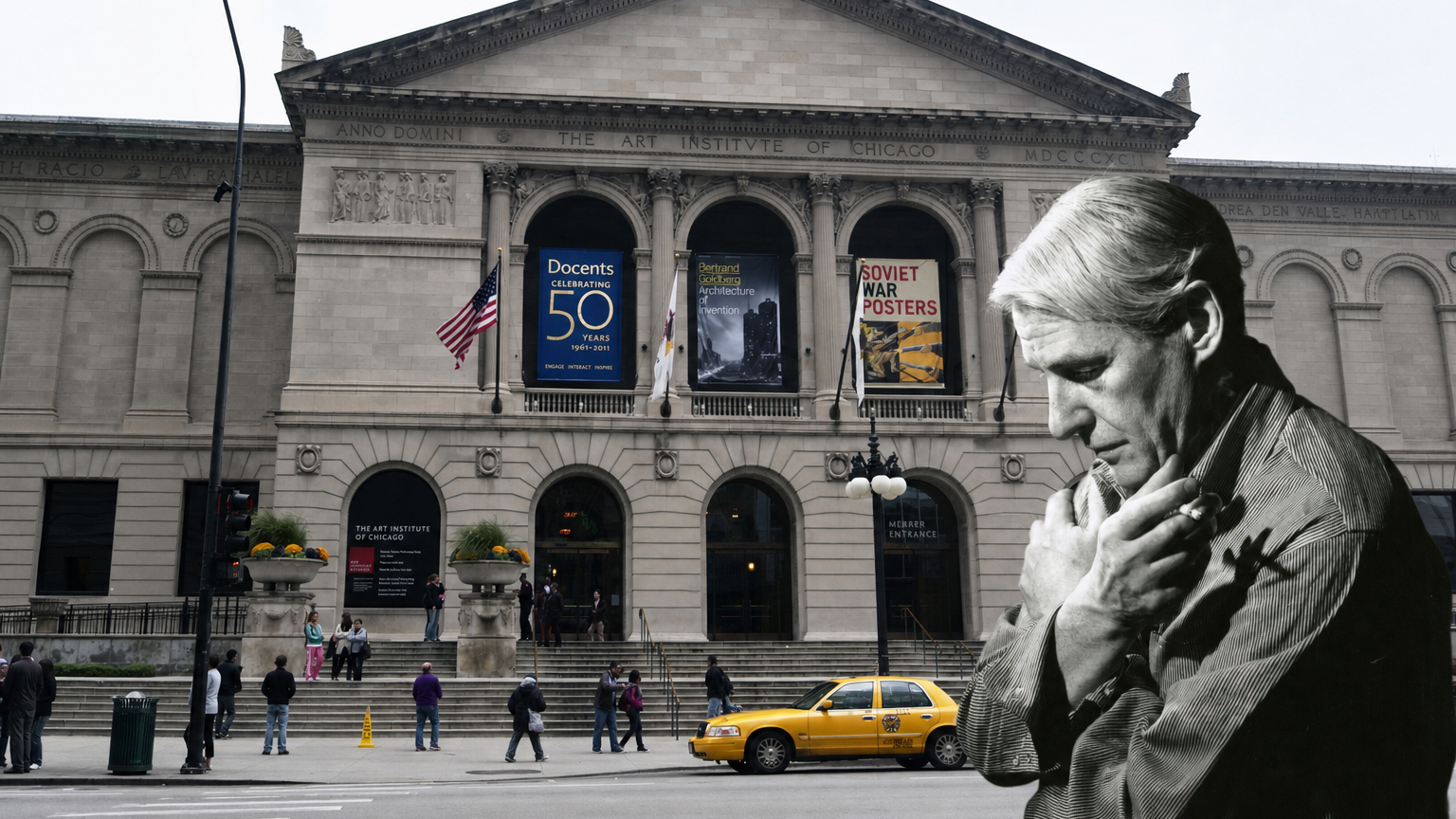


A press release from the Art Institute of Chicago described the exhibition as the first major survey dedicated to the artist’s drawing practice and the museum’s first solo presentation of his work since 1969. It assembles more than 200 pieces from public and private collections worldwide, many never exhibited together, with drawings dominating alongside a smaller selection of paintings, sculptures and prints that provide context. Kevin Salatino, chair and curator of prints and drawings at the museum, told The New York Times that drawing is fundamental to everything de Kooning did, an assessment that shapes the show’s emphasis on the medium as a driving force rather than a preparatory step.
The Art Newspaper reported that the exhibition dubs de Kooning the last Old Master, tracing the centrality of his draughtsmanship even as boundaries between media dissolved in his output. Salatino explained to the publication that the show treats drawing as a concept rather than a strict theme, incorporating hybrid works that challenge traditional categories. This approach reveals the artist’s command of line across periods, from his early rigorous training in Rotterdam to his later calligraphic abstractions.
The display includes the Art Institute’s own Excavation from 1950 and the Museum of Modern Art’s Woman I from 1950-52, according to the Chicago Sun-Times. It also features an early student work, Dish With Jugs from about 1919-21, on which de Kooning spent around 600 hours to achieve near-photorealistic detail, ARTnews reported. Rare pieces never before shown in public, drawn from private collections that hold about half the loans, add fresh perspectives to familiar masterpieces.
De Kooning was born in Rotterdam in 1904 and stowed away on a freight ship to reach the United States in 1926, an arrival whose centenary the exhibition marks, The Art Newspaper noted. He received formal training at the Academy of Visual Arts and Technical Sciences, where he mastered traditional techniques as a teenager before rejecting and reinventing them in his mature work. The artist drew constantly throughout his career, even as he became a leading abstract expressionist known for works that merged figuration and abstraction, and curators estimate that 2,000 to 3,000 drawings by him survive.

The Art Institute of Chicago organized the exhibition in collaboration with the Rijksmuseum in Amsterdam, where a version will open in the fall, and in consultation with The Willem de Kooning Foundation, a museum announcement said. A comprehensive catalogue, featuring nearly 250 illustrations and essays on materials and techniques, accompanies the show, with contributions from paper conservator Margaret Holben Ellis. The publication underscores how de Kooning activated his line to bridge figuration and abstraction throughout his career.
This is the first drawings exhibition of any kind to occupy the museum’s Regenstein Hall in 20 years, the Chicago Sun-Times reported, underscoring the significance of both the artist and the works on view. Entry requires a $7 ticket in addition to museum admission, with access managed through a virtual line that typically involves waits of 15 to 30 minutes. An Art Basel and UBS report placed global art market sales at $59.6 billion in 2025, with postwar art accounting for 31 percent of fine art auction value in a sector where de Kooning’s pieces frequently appear.