
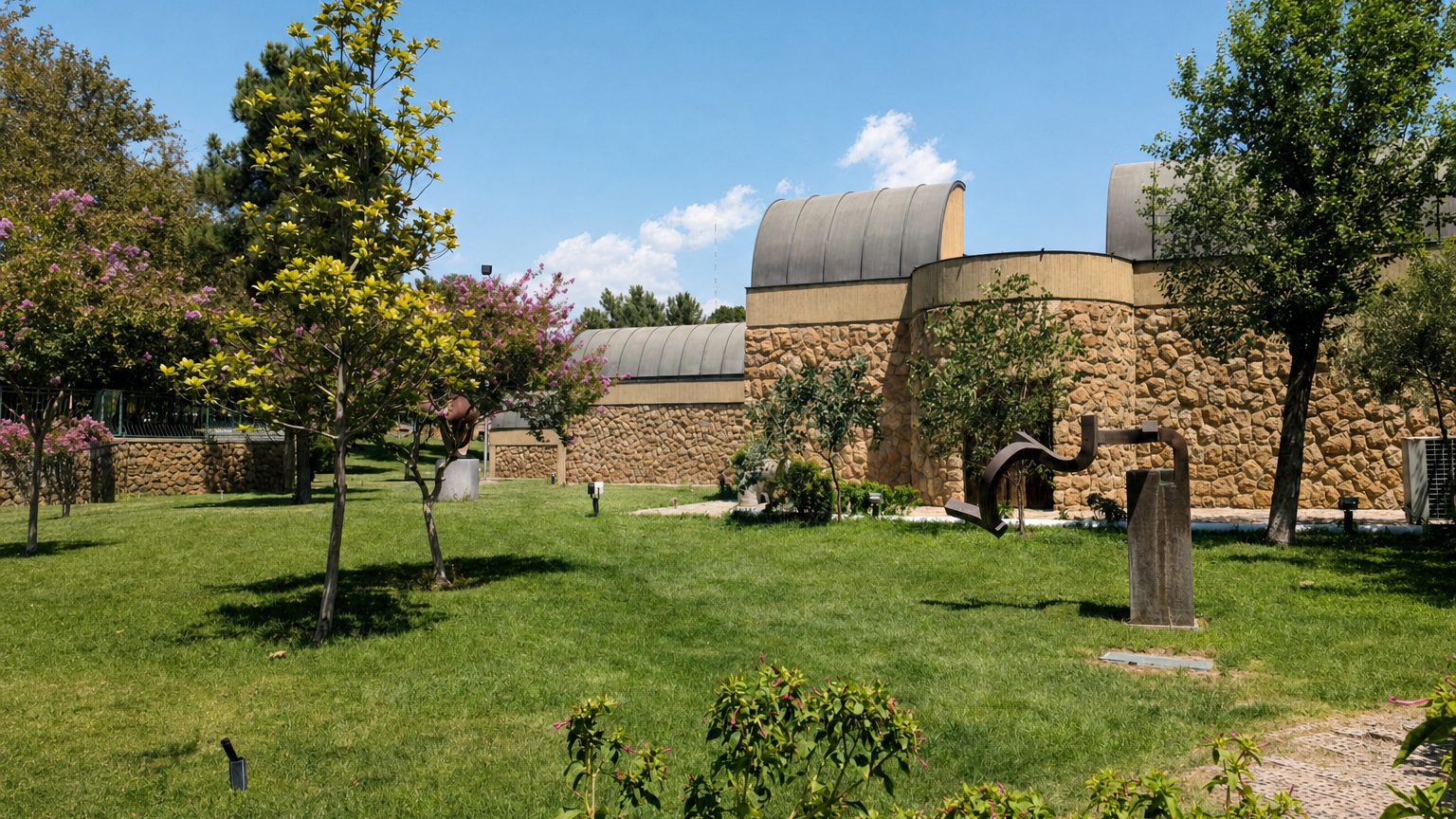


The Tehran Museum of Contemporary Art reopened its doors after a period of closure prompted by bombardment during a 40-day conflict that ran from February 28 to April 8 and claimed around 3,500 lives, The Art Newspaper reported on May 14. The institution has initiated a post-ceasefire programme of weekly rotating displays under the title Art and War that draws from its permanent collection to examine how artists across eras and regions have addressed violence and crisis. Museum director Reza Dabirinezhad told Iranian media that only a limited number of works were exhibited at any one time in case renewed hostilities required their swift return to secure storage.
The opening week of the series, which began around May 3, presented six works by American Pop artists Roy Lichtenstein, James Rosenquist and Robert Indiana selected for their anti-war themes, according to The Times of Israel. The second rotation shifted focus to Spain with 11 pieces by Pablo Picasso, Antoni Tàpies, Robert Motherwell and Juan Genovés that respond to the Spanish Civil War, The Art Newspaper said. One display included three works from Picasso’s Weeping Woman series while precautions were taken with pieces containing roughly 4,000 litres of oil that were removed entirely to reduce fire risk in the event of any further attack.
Reza Dabirinezhad described the museum’s curatorial method in comments carried by The Art Newspaper. “Our approach is socially oriented. We see artworks as cultural forms with multiple layers, capable of being reinterpreted in different contexts,” he said. Dabirinezhad added that the programme would continue with forthcoming weeks dedicated to Mexico featuring artists such as Demián Flores, Emiliano Gironella and Adolfo Mexiac before moving on to broader European selections and finally Iranian works that may include pages from the Shah Tahmasp Shahnameh. “War, by its nature, is anti-human, while art seeks to create human narratives,” he stated.
The museum, widely regarded as home to the largest collection of Western modern art outside Europe and the United States, acquired many of its holdings during the 1970s under Empress Farah Pahlavi, The Art Newspaper noted. Much of that collection has remained in storage since the 1979 revolution yet the current series marks a deliberate re-engagement with those holdings in response to recent events. Tehran Times reported that the exhibition series was conceived as an artistic reaction to the recent assault on Iran that killed civilians, officials and military commanders including the Leader of the Islamic Revolution.
Visitors to the early rotations have remarked on the resonance between the displayed works and their own experiences of the recent conflict, an Associated Press dispatch from May 8 indicated. One attendee told Iranian media that certain paintings recalled scenes witnessed during the bombardment. The displays operate under continued emergency protocols even after the ceasefire that took hold in early April, with the museum open daily except Mondays from 10am to 5pm at its site beside Laleh Park.
Subsequent phases of the Art and War programme are scheduled to broaden the geographic and historical scope while maintaining the emphasis on art’s capacity to reflect and resist, according to statements from museum officials carried by IRNA. The rotating format allows gradual reintroduction of works from storage as security conditions stabilise. Officials have indicated that the full series will run through late May and into June with the final European-focused segment featuring post-World War II masters.