




Bengaluru Development Minister Krishna Byre Gowda announced the festival on behalf of the state government, which has framed the event as a response to the demands of modern urban life that often sidelines cultural engagement. Byre Gowda said the government bears responsibility not only for infrastructure but also for enriching residents’ experiences while safeguarding Karnataka’s artistic traditions. “In this spirit, the State Government has decided to organise Bengaluru Jatre,” he said, according to a statement from the Greater Bengaluru Authority. The initiative falls under the leadership of Chief Minister D K Shivakumar and seeks to adapt village-style communal festivities to the state capital.
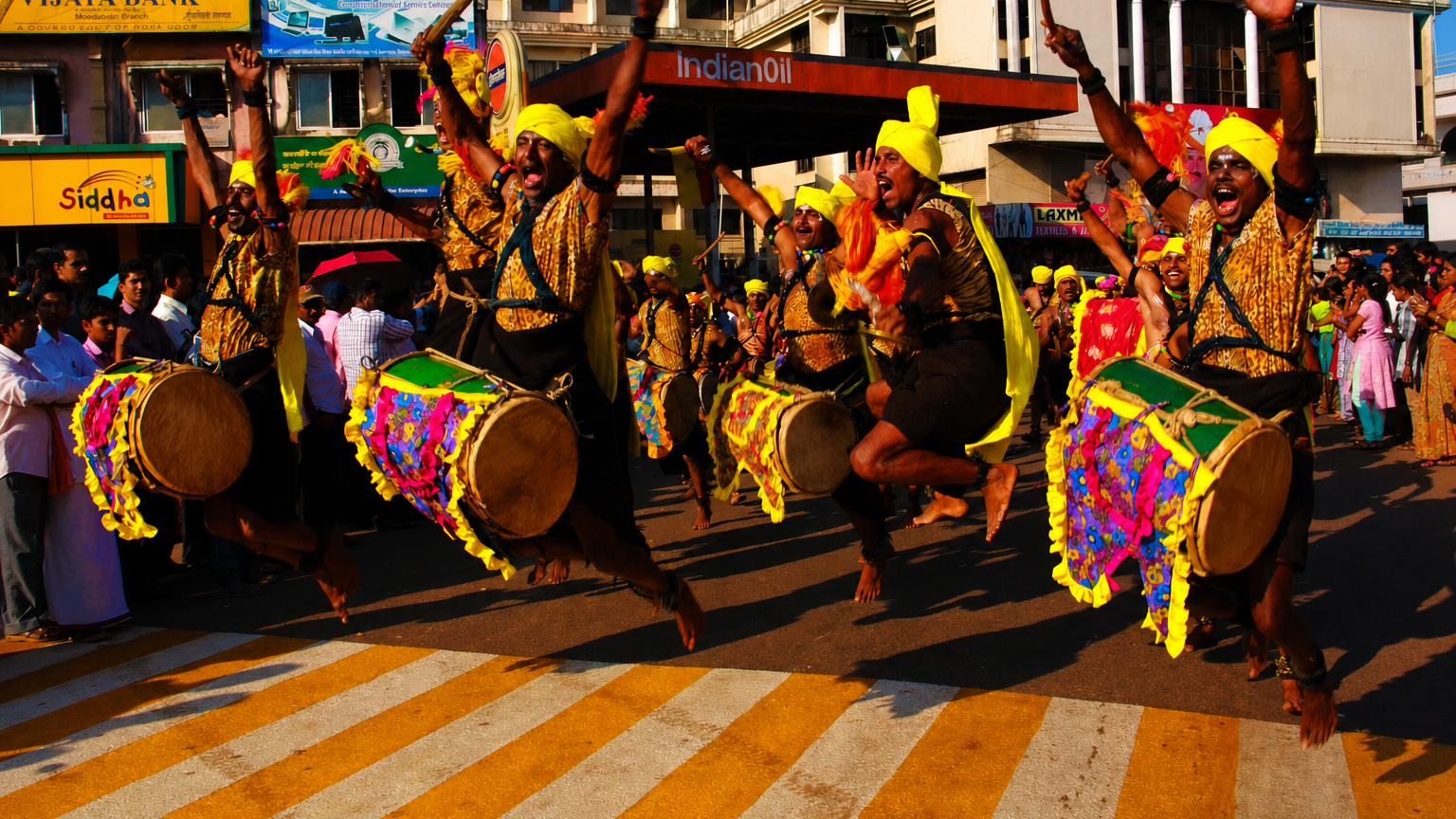
Historical accounts of Karnataka traditions describe Ooru Habba or Jatre as community-wide events rooted in the state’s agrarian past, where residents would gather for processions, folk dances and storytelling to honour local deities and mark seasonal cycles. Conservation architect Roshini M noted that Bengaluru itself evolved from a collection of more than 500 villages, many of which maintained distinct habba celebrations that reinforced social ties and passed down oral histories through generations. These festivals typically incorporated performances such as Dollu Kunitha drum dances, helping to sustain cultural continuity even as urban expansion altered the physical landscape.
The Bengaluru Jatre will dispense with any single dedicated ground or central stage, instead transforming the city into an expansive venue for activities. Streets, parks, neighbourhoods, educational institutions, museums and cultural centres will host programmes spanning music, dance, theatre, food, literature, art, science, heritage and innovation. Greater Bengaluru Authority officials said the format will function as a decentralised and collaborative platform, inviting contributions from communities, schools, colleges, businesses, artists and government bodies alike.
Byre Gowda emphasised that organisers will avoid imposing a uniform structure, permitting each participating area to shape events according to local contexts and preferences. The approach draws directly from traditional Jatre practices in which entire villages assumed ownership of the celebrations rather than relying on top-down directives. This model, the authority statement added, aims to foster genuine neighbourhood-level participation across the metropolis.
Bengaluru has hosted a growing roster of cultural events in recent years, including the India Art Festival that featured more than 3,000 artworks from over 300 artists as The Hindu reported in late 2025. The Infosys Foundation’s Kala Dhwani gathering earlier in 2026 brought together more than 200 folk and tribal performers representing at least 50 art forms from six states, according to the foundation’s published programme. Such gatherings have underscored the city’s expanding role as a hub for both traditional and contemporary artistic expression.
Cultural festivals in the broader region have produced notable economic effects, with Deccan Herald reporting that Mysuru’s Dasara events generated hotel revenues surpassing Rs 100 crore within two weeks through elevated tourist arrivals. A multidisciplinary research journal study focused on Bengaluru Urban found that 75 to 80 per cent of surveyed consumers direct significant spending toward festival-related goods and services, thereby supporting informal sector employment for vendors and artisans. Planners anticipate the forthcoming Jatre will distribute similar activity and benefits more evenly across diverse city quarters.