


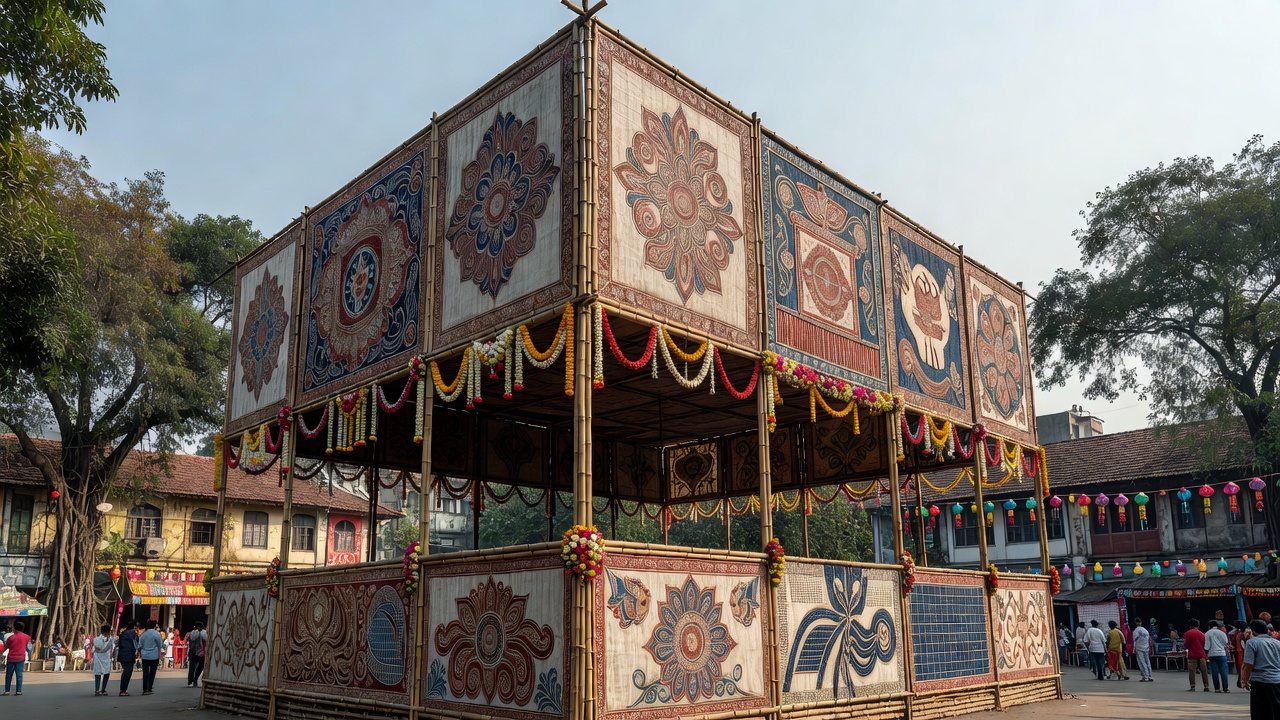


The Business Standard portrayed Durga Puja as an annual event that merges religious devotion with creative artistry and community participation across Bengal. Elaborate temporary structures known as pandals feature thematic designs crafted by artists, often incorporating social messages alongside traditional iconography of Goddess Durga. The festival culminates in the immersion of idols on Vijayadashami, marking the goddess’s return to her divine abode after her symbolic victory over evil.
UNESCO inscribed Durga Puja in Kolkata on its Representative List of the Intangible Cultural Heritage of Humanity in December 2021. A British Council study from 2019 estimated the creative economy tied to the festival at 32,377 crore rupees, equivalent to 2.58 percent of West Bengal’s gross state domestic product that year. Later assessments reported by the Indian Express and other outlets placed the broader economic impact between 50,000 crore and 65,000 crore rupees annually, encompassing crafts, retail, hospitality and related sectors.
Historical records trace organised Durga Puja in Bengal to the early 17th century, beginning with aristocratic patronage by families such as the Sabarna Roy Choudhury in 1610. The shift toward community-funded barowari pujas emerged in the late 18th century in places like Guptipara, expanding participation beyond elite households. In Bangladesh, where the Hindu community constitutes about 8 percent of the population according to census data, authorities reported more than 31,000 mandaps hosted the festival in 2024.
Artisans in Kolkata’s Kumartuli neighbourhood spend months sculpting the idols from clay, a tradition that supports thousands of livelihoods each year. Pandals in the city frequently adopt innovative themes drawn from contemporary issues, ranging from environmental sustainability to cultural heritage preservation. The festival also features performances of dhak drumming, folk dances and cultural programmes that reinforce its status as a living expression of Bengali identity.
In Bangladesh the occasion extends beyond religious observance to serve as a platform for social harmony and cultural exchange. Local markets see heightened demand for clothing, sweets, decorations and handicrafts, with one estimate from economic observers valuing the associated spending at around 20,000 crore taka. Government directives this year designated three official holidays for the festival, extending to five days when combined with the weekend.
The scale of participation in Kolkata alone includes roughly 3,000 community pujas, with more than 200 operating on budgets exceeding one crore rupees. Tourism authorities have promoted the event internationally since the UNESCO recognition, drawing visitors from across India and abroad to witness the immersive displays. Employment for sculptors, electricians, decorators and temporary workers peaks in the months leading up to the autumn celebration.