


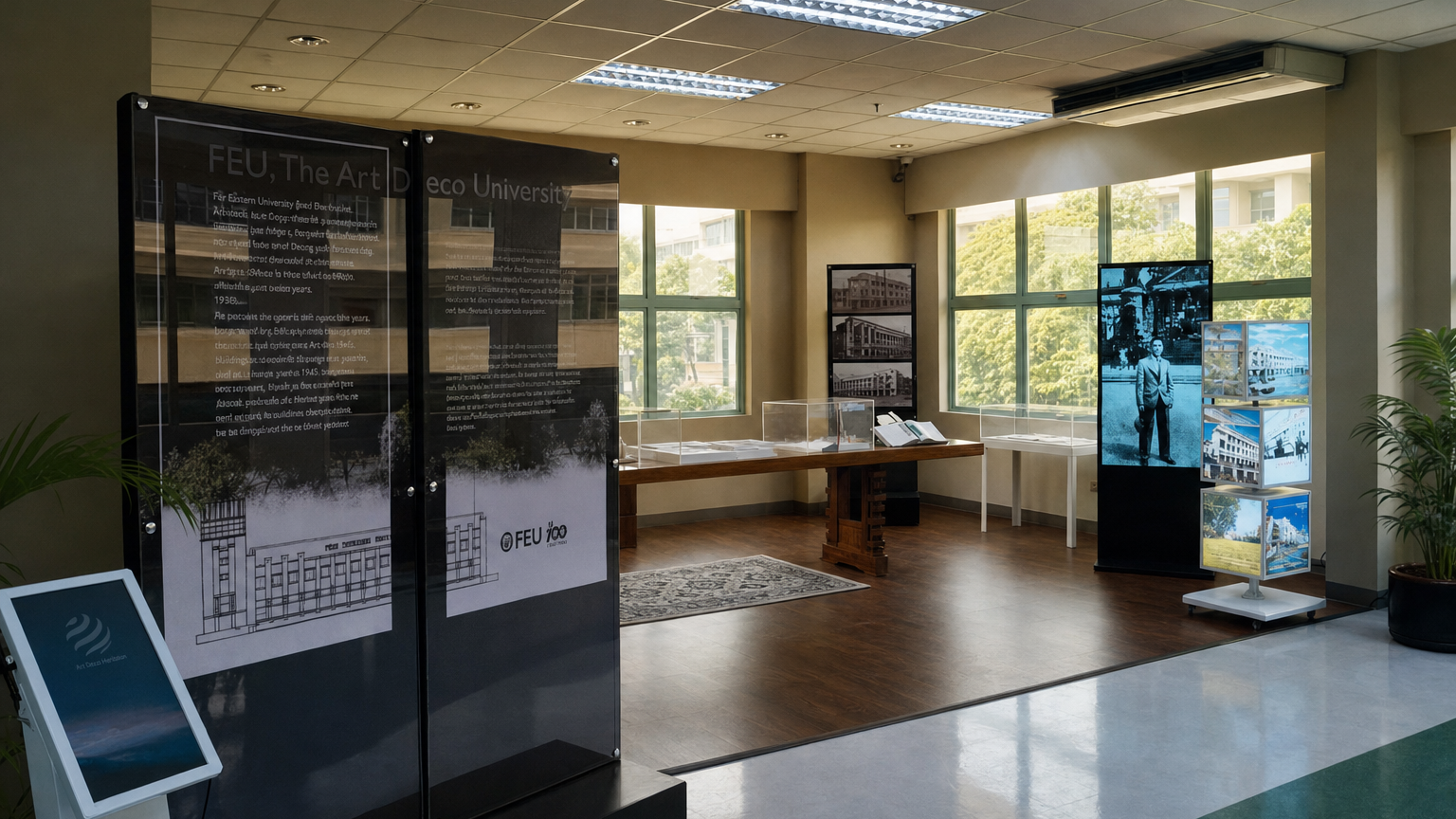


The exhibition opened at the University Library with archival materials, photographs and architectural works that trace the contributions of Pablo Antonio Sr., who shaped multiple campus buildings between 1939 and 1950, according to FEU News. Organized by Library Services and Corporate Affairs, the display forms part of the university’s centennial preparations leading to 2028. University Librarian Dr. Maria Gia Gamolo attended the opening alongside members of the FEU community, where visitors can view the collection from the third floor of Nicanor Reyes Hall to better understand the Art Deco elements that define the grounds.
FEU News reported that the exhibition serves as a bridge between our past and present, reminding the FEU community that our campus is more than a place of learning, it is a living heritage site that reflects our values, aspirations, and commitment to excellence. The show focuses on how Antonio’s designs for the Administration Building, Admissions Building, Architecture and Fine Arts Building and Science Building established the university’s distinctive architectural character. These structures continue to influence daily life on campus more than seven decades later.
The National Commission for Culture and the Arts declared six FEU buildings National Cultural Treasures through Museum Declaration No. 1-2018, an assessment that highlights their role in Philippine architectural history. This status covers key structures that embody the Art Deco style adapted to the local context during the pre-war and immediate post-war periods. The recognition has positioned the campus as a significant site for heritage preservation efforts across the country.
Far Eastern University’s broader arts programming provides context for the current exhibition, with the Center for the Arts having awarded about 5,000 scholarships to student artists since 2007, according to an Inquirer Plus profile of the program’s leadership. Under director Martin Lopez, the center supports groups including the FEU Theater Guild, FEU Chorale and FEU Dance Company, which regularly stage performances that connect students with Philippine cultural traditions. Such initiatives have helped establish the university as a cultural hub within Manila’s University Belt.
The institution, founded in 1928, has integrated arts and culture into its identity throughout its history, with recent activities including memorial lectures on national artists and displays of works tied to Philippine heritage, FEU announcements show. These programs draw participation from across academic disciplines, including both humanities and health sciences students. The heritage exhibition extends this tradition by offering an extended window into the university’s own architectural legacy.
Running through February 2029, the display allows ongoing engagement for students, alumni and the public as FEU approaches its centennial, according to the organizing bodies. Additional context from university records indicates that the event aligns with National Heritage Month observances that encourage reflection on institutional and national history. Related cultural programming continues to reinforce the campus’s role in preserving and interpreting Philippine artistic traditions.