


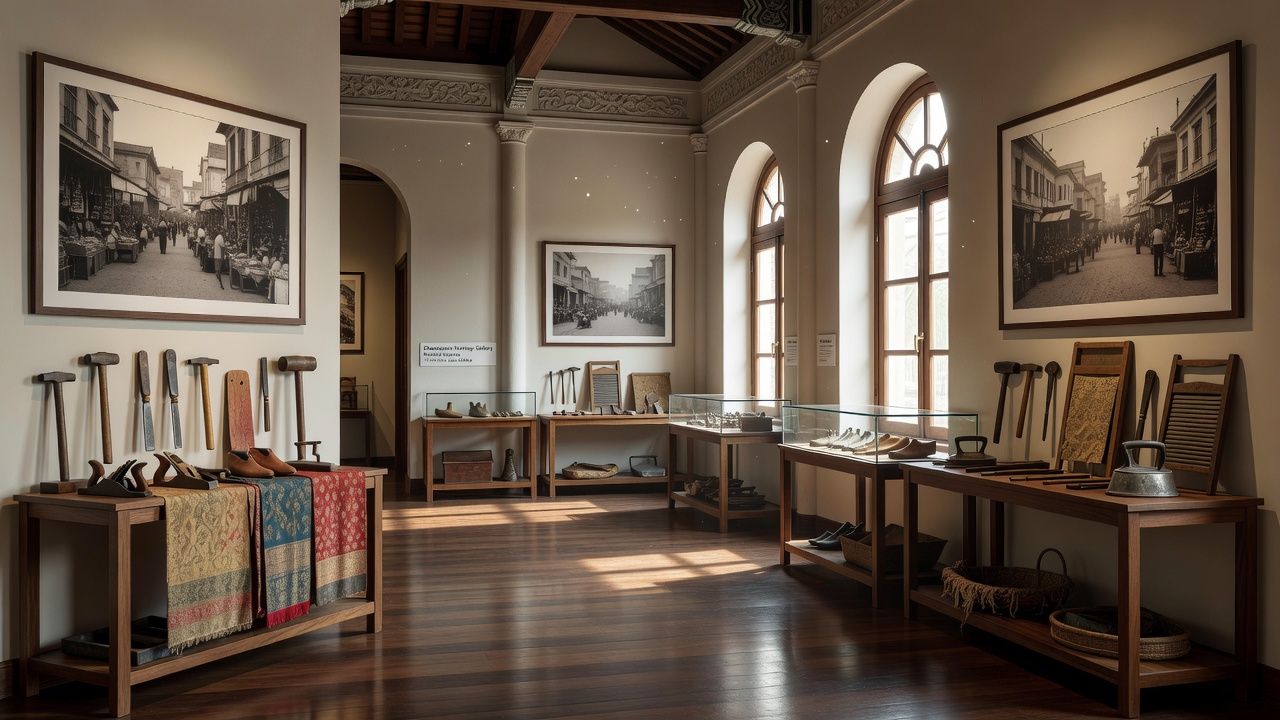


The Huining Huiguan building at 17 Blackburn Lane in Kolkata now contains the Cheenapara Heritage Gallery, which opened in September 2026 and displays photographs by Bijoy Chowdhury together with artefacts and personal items donated by community members. A Mint report published on October 11 described the exhibition as an effort to document the history of residents who once clustered in Tiretta Bazaar, known locally as Chinatown. The gallery highlights occupational traditions that became embedded in the city’s commercial life over more than two centuries.
Chinese trader Atchew, recorded also as Yang Yazhao, obtained land from Governor-General Warren Hastings in 1778 for a sugar plantation beside the Hooghly river, an enterprise that drew labourers and established the first settlement at Achipur near present-day Budge Budge. Migration from Guangdong province rose after the First Opium War of 1839-1842, while a British census in 1901 counted 1,640 Chinese residents in Kolkata. The population later climbed to between 20,000 and 26,000 at its mid-20th-century peak before external events triggered a steep decline.
Cantonese arrivals specialised in carpentry and ran workshops such as Guangdexing Brothers and Guangdong Carpentry, several of which still trade in Tiretta Bazaar. Migrants from Hubei province became known as skilled dentists and opened around 80 clinics throughout the city after the Second World War. Shandong settlers focused on silk, garments, groceries and laundries, among them the Shanghai Company founded in 1936 that continues operating today.
Hakka families first developed shoemaking businesses with outlets on Bentinck Street and later established tanneries in the Tangra district, where wartime demand in the 1940s brought the sector to its height. Many of those tanneries eventually closed or converted into restaurants when mass-produced footwear and stricter environmental regulations reduced viability. The community also introduced culinary practices that evolved into Kolkata-style Indo-Chinese dishes, including Hakka noodles and chili chicken, which remain widely available.
The 1962 Sino-Indian War led to the internment of many ethnic Chinese at a camp in Deoli, Rajasthan, prompting numerous families to emigrate to Canada, Australia or Hong Kong. Community estimates place the current Chinese-origin population in Kolkata at roughly 2,000, a sharp drop from earlier decades. Temples, cemeteries and a handful of longstanding businesses nevertheless continue to mark the group’s historical footprint.
Exhibits inside the new gallery include images of festivals, daily life and specialised trades, allowing visitors to examine a once-vibrant diaspora that helped form parts of the city’s urban identity. The Chinese community supplied many of the displayed documents and memorabilia to support the curations. Interest in the gallery has extended beyond the Chinese population, with local residents from other backgrounds attending to learn about this chapter of Kolkata’s past.