


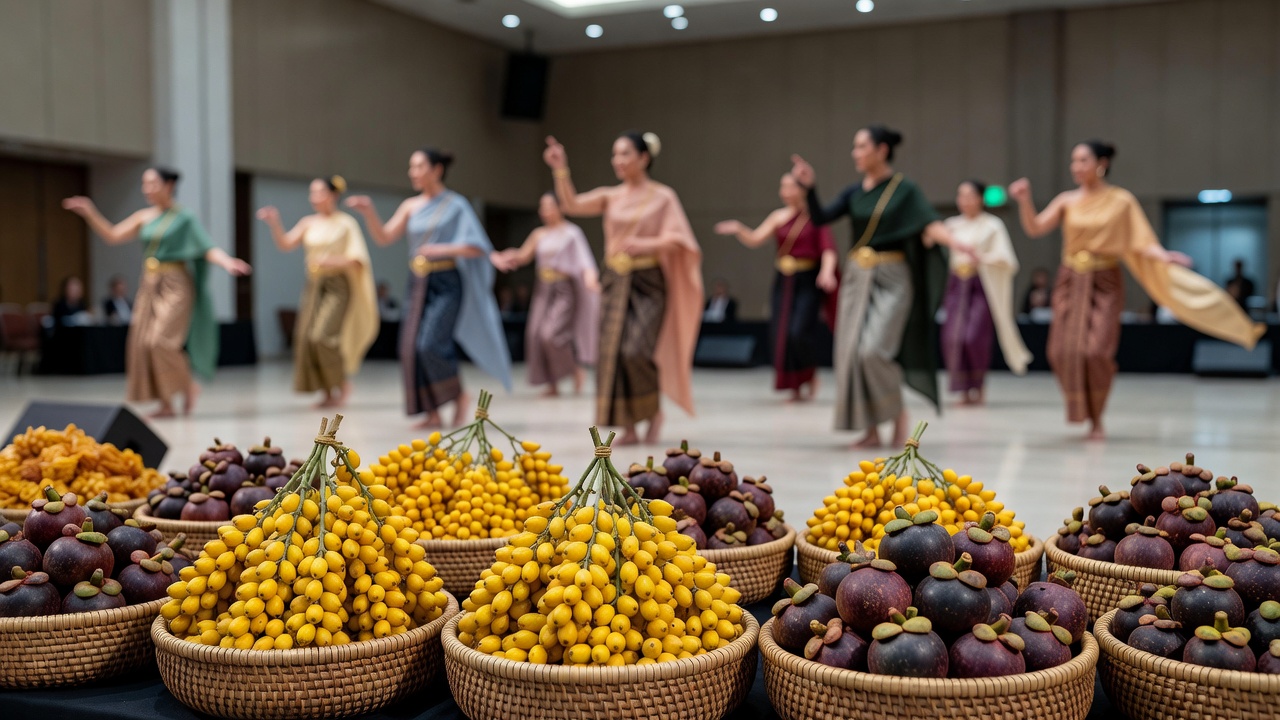


Nation Thailand reported that the dance production titled The Land of Prosperity was staged at the International Monetary Fund and World Bank Group Annual Meetings in Bangkok on October 14, 2026. The show was created by the Phetch Jaras Saeng troupe and depicted Thailand as the ancient land of Suvarnabhumi by highlighting the prosperity and happiness drawn from the country’s natural abundance, culture and fertile lands. Contemporary Thai dance and music formed the core of the presentation, which placed longkong and mangosteen at the centre to introduce these fruits to an international audience. A representative of the troupe explained that the performance sought to familiarise visitors with local produce that some foreigners might not recognise.
According to Nation Thailand, the artists carried baskets of fresh fruit onto the stage during the show and distributed samples to audience members to let them experience both the appearance and flavour. Worawut Saengsawat, a representative of Phetch Jaras Saeng, told Bangkok Biznews that the team combined movements drawn from traditional Thai games with lively dance steps so the audience could take part. The production blended these interactive elements with music to create an engaging display for the finance leaders in attendance. This approach turned the abstract theme of prosperity into a tangible experience through fruit and movement.
Nation Thailand coverage of the meetings noted that Thailand is hosting the IMF-World Bank Group Annual Meetings from October 12 to 18, 2026, the first time the country has done so in 35 years. A separate report from the same outlet placed attendance at more than 15,000 participants from 191 countries, including finance ministers and central bank governors gathered at the Queen Sirikit National Convention Center. The dance performance formed one part of a broader cultural programme that has featured traditional fruit carts offering seasonal produce and sweets as a form of soft power. These carts have rotated daily selections including Phulae pineapple from Chiang Rai and rambutan from Surat Thani.
Worawut Saengsawat told Bangkok Biznews, as cited by Nation Thailand, that the troupe wanted foreign visitors to taste Thai fruit. He stated that longkong and mangosteen became central elements precisely because they might be unfamiliar to some delegates. The performance therefore encouraged direct engagement by inviting the audience to sample the fruit while watching the choreography. Such elements complemented other daily cultural activities at the meetings that have included Nora dance and wellness sessions.
A Nation Thailand report on the event’s opening days indicated that the fruit carts served mangoes and yellow watermelon on the first morning before shifting to rambutan and Phulae pineapple the following day. Coconut ice cream appeared in the afternoon rotation, drawing praise from guests for freshness and presentation. These initiatives, like the October 14 dance, align with Thailand’s efforts to showcase its agricultural and artistic traditions to global leaders. The meetings have provided a platform for such cultural exchanges alongside discussions on economic issues.
Nation Thailand described the Phetch Jaras Saeng production as bringing together dance, music and fresh fruit in a single performance to convey themes of prosperity. The troupe’s representative emphasised the participatory nature of the movements to make the show more accessible and memorable for the international delegates. This cultural offering occurred as part of Thailand’s hosting duties, which have also included handicraft demonstrations and presentations on the country’s digital infrastructure. The performance on October 14 added an artistic dimension to the week-long gathering that continues through October 18.