




The Treasures of the Pharaohs exhibition at the de Young Museum features the first North American display of 20 artifacts from ancient Egypt’s so-called Golden City as part of a 130-object collection spanning 3,000 years. Curated by Tarek El Awady, former director of the Egyptian Museum in Cairo, the show opened on August 1, 2026, and runs through January 31, 2027, before traveling to the Kimbell Art Museum in Fort Worth. A report in The Art Newspaper noted that the objects come from the Egyptian Museum in Cairo and Luxor Museum, mixing royal treasures with items that illuminate everyday existence under the pharaohs.
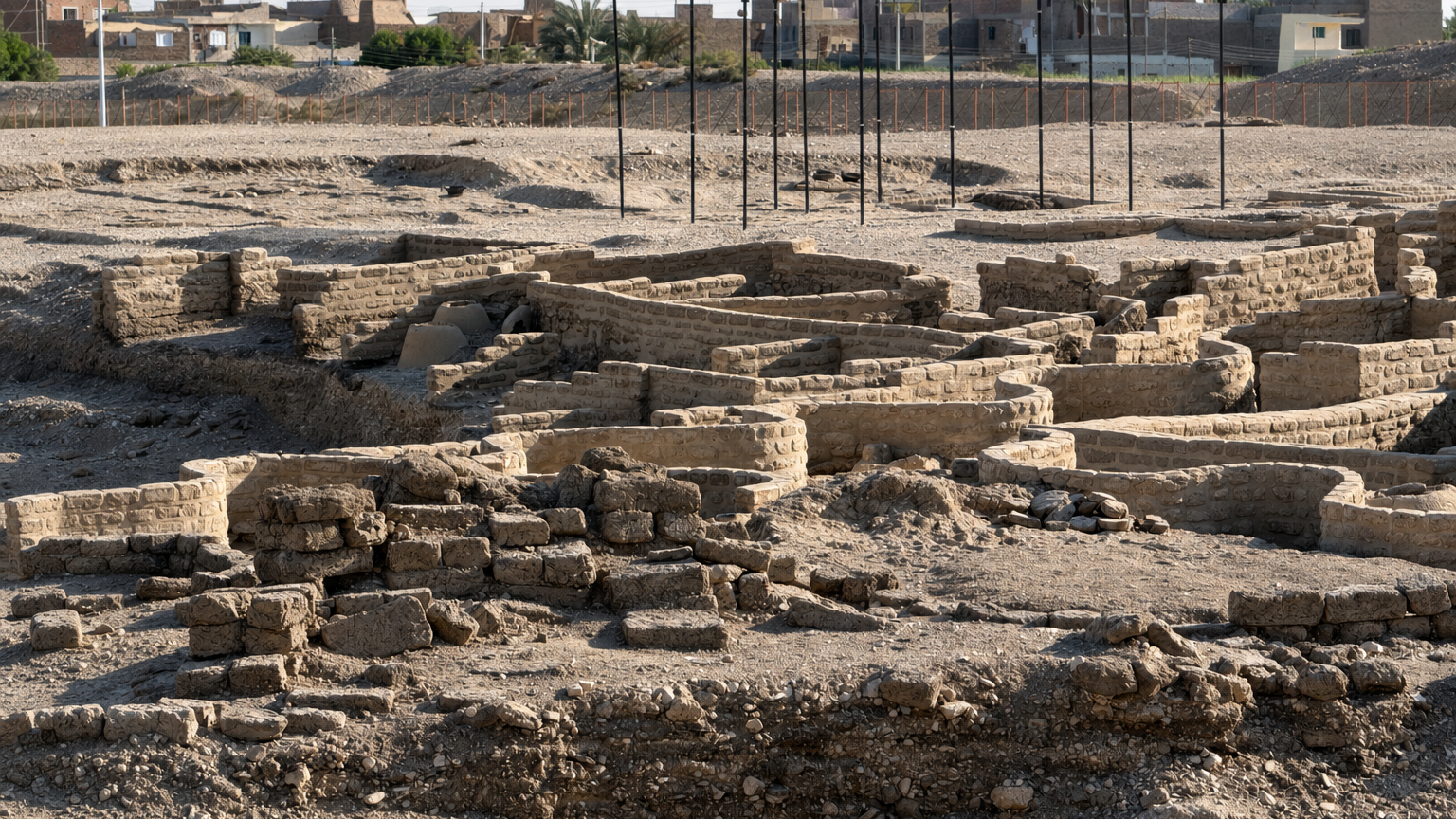
Renée Dreyfus, the de Young Museum’s curator of ancient art and antiquities for the exhibition, highlighted the significance of the Golden City finds, which date to the reign of Amenhotep III from about 1390 to 1352 BC. “The discovery of the Golden City is amazing in that it shows exactly the time when Amenhotep III was ruling,” Dreyfus said. The settlement on Luxor’s west bank was abandoned by Amenhotep’s son Akhenaten when he relocated the capital to Amarna and shifted religious focus to the Aten, leaving the site unusually intact, according to museum documentation.
Artifacts from the Golden City include a baby’s rattle, a limestone headrest and evidence of industrial activities such as brickmaking, food production and workshops that supported the pharaoh’s building projects. The city, known in antiquity as the Dazzling Aten, represented the largest known urban center from that period and served as both an administrative and industrial hub before its sudden desertion. Its preservation offers a Pompeii-like view of New Kingdom life, a Fine Arts Museums of San Francisco assessment found.
The exhibition organizes its displays into six thematic sections that begin with the gold of the pharaohs, including jewelry, sacred objects and gilded sarcophagi from multiple dynasties. It then examines the social order surrounding rulers, the concept of kingship, religious practices and finally ancient Egyptian views on mortality and the afterlife. “The treasures of the pharaoh are the people who worked for and under him, all the people who administered to the king and brought him up,” Dreyfus stated in remarks carried by The Art Newspaper.

Additional highlights comprise a limestone relief depicting Akhenaten and his family worshipping the Aten, an ornate armchair made for Princess Sitamun and the outer anthropoid coffin lid of Thuya, mother-in-law of Amenhotep III. The show follows its international debut in Rome and incorporates objects never before exhibited in the United States, with the Golden City material forming a key focus of the San Francisco presentation. Egyptologists have described the 2021 rediscovery of the city, initially sought as the location of a mortuary temple, as one of the most important archaeological revelations in decades.
Salima Ikram, head of Egyptology at the American University in Cairo, called the Golden City find mind-blowing when it was first announced, underscoring its value in revealing details of ordinary workers’ lives during a prosperous era. The New Kingdom period of the Golden City occurred roughly 1,000 years after the Great Pyramids and 1,500 years before the time of Cleopatra, providing context for its place in Egyptian history. Admission to the exhibition ranges from $11 to $20 with free entry for children age 17 and younger, the de Young Museum reported.