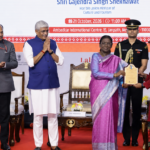






Jammu and Kashmir Lieutenant Governor Manoj Sinha on October 21, 2026, urged that Basohli be developed as a global centre of art, culture and creativity as he spoke during the Basohli Utsav festival. The lieutenant governor described the gathering as the Mahakumbh of art, culture and tradition, reminding all sections of society that they inherit India’s great heritage and should contribute to cultural renaissance. According to local reporting, Sinha highlighted opportunities to promote brand Basohli worldwide for its handicrafts and renowned miniature paintings.
Sinha stated that Basohli embodies a complete exuberance of art and culture, with sensitivity embedded in its traditions that transcend its status as a point on the map or entry in history books. The lieutenant governor noted that the town functions as an energy field for those dedicated to art, literature and tradition who have committed their lives to mastering these forms. He added that advancing Viksit Bharat requires focused promotion of the area’s tangible and intangible cultural assets for transmission to younger generations.
The Basohli Utsav is organised by the J&K Academy of Art, Culture and Languages in partnership with the divisional administration Jammu and the Indira Gandhi National Centre for the Arts. Organisers reported that activities on October 20 included a Geet Govind presentation behind the Old Fort, a cartoon workshop involving artists from across India and a traditional Dam Chokdi event in Mandi Mohalla that celebrated community spirit. The festival, running from October 19 to 21, will continue as an annual fixture on the cultural calendar, according to the Department of Culture.
Basohli paintings represent one of the earliest schools of Pahari miniature art, originating in the 17th century in what is now Kathua district, according to art historians who cite early series illustrating the Rasamanjari and Gita Govinda. The craft secured a Geographical Indication tag in 2023 as the first independent GI product from the Jammu region after facilitation by NABARD and the Directorate of Handicrafts and Handloom, the Union Ministry of Commerce and Industry announced at the time. This recognition protects authentic production and supports economic opportunities for local practitioners tied to the region’s unique style of bold colors and expressive forms.
Festival organisers said the event seeks to establish Basohli as a year-round tourism destination by drawing attention to its paintings, folklore, Ramleela traditions and surrounding landscapes while generating livelihoods for artists and entrepreneurs. The lieutenant governor called for a whole-of-government strategy to market Basohli paintings across India and abroad, including QR coding for handicrafts and pashmina to enhance visibility. Such measures build on the festival’s role in strengthening India’s soft power through global appreciation of its philosophical, spiritual and artistic traditions.