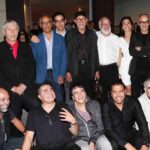


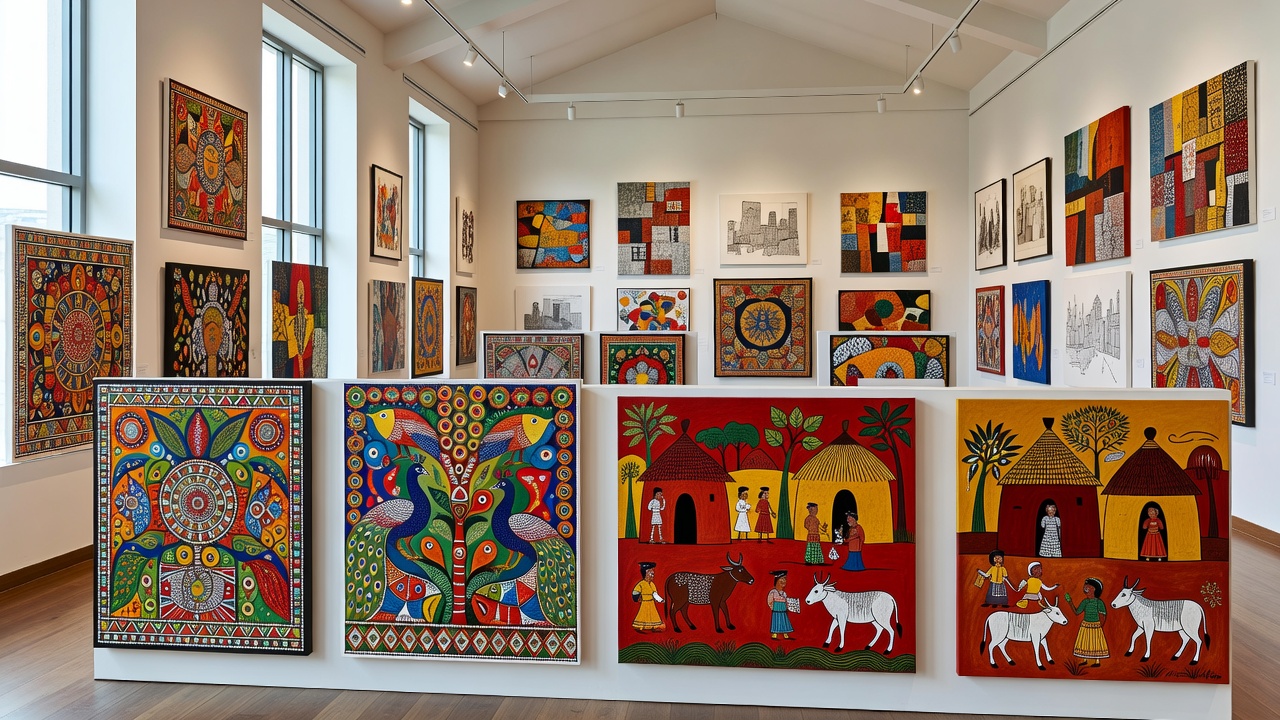


President Droupadi Murmu presided over the award ceremony of the 65th National Exhibition of Art and the 3rd Print Biennale India 2026 at Dr. Ambedkar International Centre in New Delhi on October 21. Union Minister of Culture and Tourism Gajendra Singh Shekhawat joined as guest of honour while Ministry of Culture Secretary Vivek Aggarwal and other dignitaries from arts and administration attended the function organised by the Lalit Kala Akademi. Murmu used her address to highlight the need for empowering rural and folk artists who often lack pathways to national platforms. She welcomed the minister with a Gond painting that reflected the integration of traditional forms into the national event.
Murmu described art as a mirror of culture and pointed to communities practising Sohrai painting that has earned worldwide acclaim yet whose creators frequently stay confined to their villages. “They have written to me saying that they need some training so that they too can participate in competitions” she said in her address. The president added that artists should be encouraged to create even better art and inspire others through their work. Her remarks focused on practical steps to bring such talent into the mainstream of contemporary visual arts.
The artworks displayed at this year’s exhibition express diverse themes and perspectives that reflect the breadth of Indian art and its continuously evolving nature according to Murmu. “Printmaking is also an important medium for taking art to society” she stated during the ceremony that doubled as a celebration of India’s artistic heritage cultural diversity and contemporary creativity. The president expressed pleasure at participating in an occasion that honours the rich traditions of the country’s diverse art forms along with their creative energy.
A Press Information Bureau release from September reported that the 65th National Exhibition of Art received more than 6000 entries of which 270 artists were selected through a two-tier jury process. The exhibition opened at Rabindra Bhawan in New Delhi and has been extended until October 31 to allow wider public access. Vivek Aggarwal has emphasised the importance of providing greater visibility and opportunities to artists and to contemporary Indian art in general.
Similar emphasis appeared at the 64th edition in 2025 when Murmu noted that art serves as a spiritual practice and a tool for enriching cultural heritage while fostering a sensitive society an ANI report from that event recorded. On that occasion the Lalit Kala Akademi initiated the sale of artworks for the first time generating over one crore rupees that provided direct financial support to participating artists. The Akademi established in 1954 continues to promote visual arts across painting sculpture printmaking drawing and mixed media as a national platform for emerging talent.
Minister Shekhawat has previously described art as the reflection of a nation’s identity and stated that supporting artists strengthens national spirit and consciousness according to Ministry of Culture documentation. The current award ceremony builds on that foundation by recognising selected works while addressing gaps in access for folk practitioners from rural areas. Public attendance at the extended exhibition offers an opportunity to engage directly with the breadth of submissions that spanned the country.