


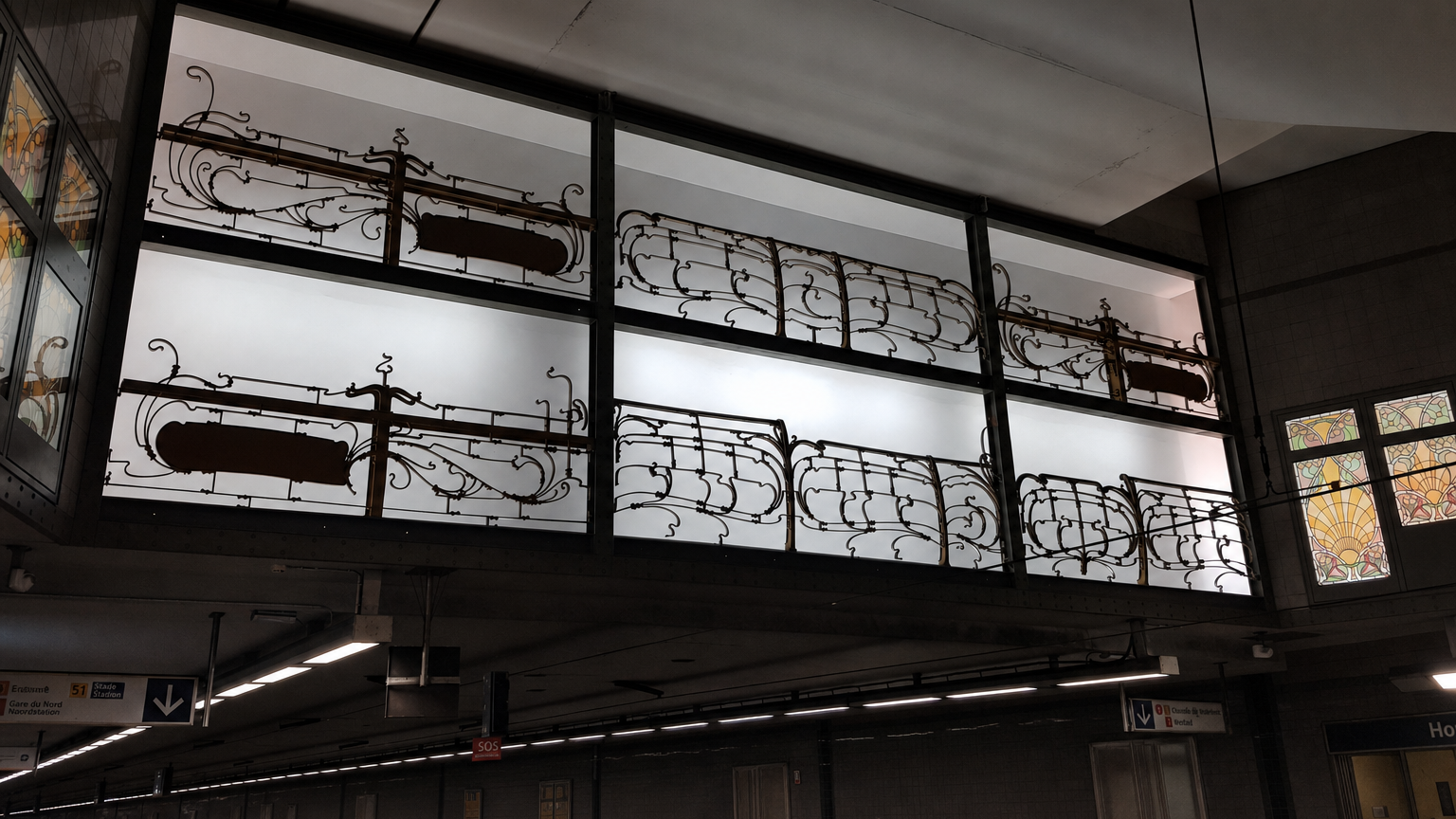


The Brussels Times reported that the Saint-Gilles commune has constructed a pavilion at the Horta metro station exit decorated with large photographs of two Art Nouveau masterpieces. The images highlight the Horta Museum in one direction and the Maison Hannon in the other, both located within a 15-minute walk. Two maps on the pavilion mark out walking routes through the streets of Saint-Gilles, pinpointing key architectural highlights along each path.
One route proceeds straight to the Maison Hannon while the other follows a winding trail leading to the Horta Museum. Along the Horta Route, pedestrians pass a notable Art Nouveau mansion on Place Morichar, an architect’s residence on Rue Wilmotte and an artists’ commune situated in Rue d’Irlande. Visitors reach the museum after immersing themselves in the architectural heritage that defines the Saint-Gilles district.
The Horta Museum constitutes one of the four major town houses by Victor Horta that UNESCO added to its World Heritage List in 2000. The World Heritage Centre describes these structures as pioneering works of Art Nouveau that represent the highest expression of the style in art and architecture. They illustrate a decisive stage in the evolution of Western architecture at the end of the 19th century.
Maison Hannon was designed by Jules Brunfaut and built from 1903 to 1904 for engineer Édouard Hannon and his wife Marie. The Brussels Museums authority notes that the house blends symbolist elements with contributions from French Art Nouveau master Émile Gallé for the interiors. Following restoration, it now functions as a museum showcasing Belgian and international Art Nouveau.
Despite its name, Horta metro station stands some distance from the Horta Museum, with the Janson stop on tramline 92 offering closer access, The Brussels Times noted. The Brussels transport authority follows its own conventions in such naming decisions. The new pavilion addresses this gap by orienting arriving passengers toward the cultural sites.
Derek Blyth, author of “The 500 Hidden Secrets of Belgium,” features the pavilion in his Hidden Belgium series for The Brussels Times. Blyth presents one hidden secret daily, drawing attention to overlooked aspects of Belgian culture and heritage. The column underscores how the commune has cleverly leveraged the metro exit to promote its Art Nouveau attractions.