


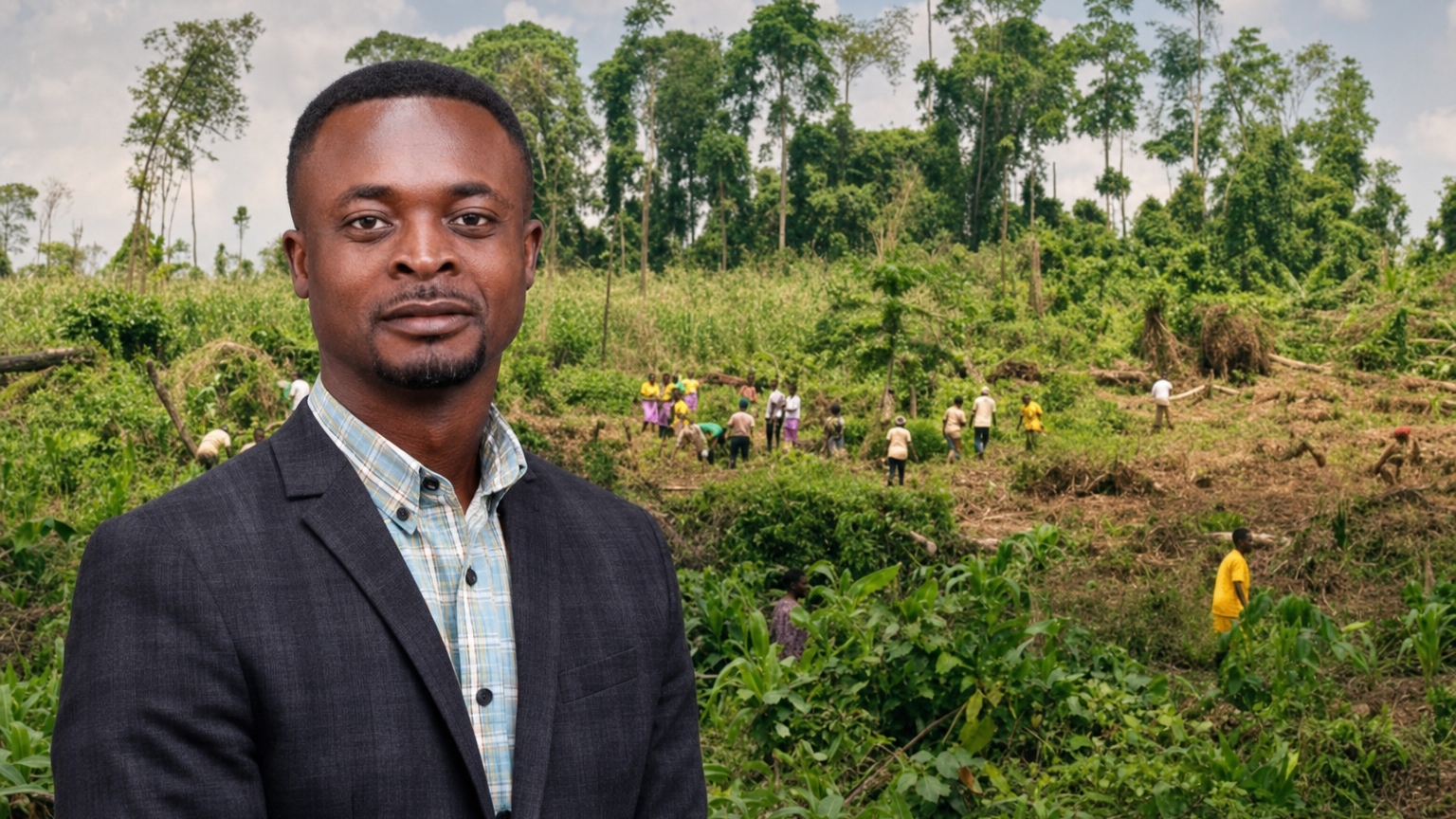


Eric Lartey, the Landscape Restoration Manager for the Ghana Cocoa Belt at the World Resources Institute, addressed the Climate x Culture Summit to stress that successful ecological restoration depends on connecting with local communities through familiar cultural channels. According to Lartey, music, oral traditions, festivals and customary practices shape how Ghanaian communities relate to land, forests, water and biodiversity. He argued that embedding these elements makes environmental initiatives more relevant and sustainable over time.
Lartey said restoration is more about people than purely technical measures, a view he presented during the October 22 event organised by Culture Joint Media in partnership with Ghana’s Minister of State for Climate Change and Sustainability. Bringing cultural perspectives into projects can strengthen community ownership while tapping traditional ecological knowledge that a World Resources Institute assessment found can inform more effective restoration practices. “Restoration is more about people,” Mr Lartey said.
The World Resources Institute operates the Restoration Artists Network, a global initiative that connects musicians, visual artists, storytellers and cultural leaders to restoration work. Lartey told summit participants that artists function as powerful storytellers and cultural influencers who can transform technical concepts into simpler, more engaging messages for broader audiences. A joint project between Ghanaian and American artists has produced six songs drawing on Ghanaian musical traditions and local languages to give landscape restoration a local and human voice.
Lartey stated that restoration efforts will endure only if they are locally led and culturally grounded, identifying the World Resources Institute’s Restore Local framework as the model for pursuing that approach across Africa. The framework focuses on community-based agroforestry and landscape restoration in regions including Ghana’s cocoa belt, Kenya’s Greater Rift Valley and the Lake Kivu and Rusizi River Basin. World Resources Institute data places the scale of comparable locally led projects at more than 43,500 hectares of degraded land brought under restoration, alongside creation of 58,500 jobs and benefits reaching nearly 170,000 people.
The Climate x Culture Summit convened under the theme Designing Sustainable Creative Experiences For Africa at the Google AI Community Centre and drew representatives from climate, creative, business, media and technology sectors. Culture Joint Media reported that the gathering examined how culture and creativity can support climate action and sustainable development beyond conventional policy discussions. Partners included the Centre for CSR West Africa, the Climate and Development Knowledge Network and the Ghana Youth Environment Movement.
A musical performance by the Restoration Artists Network illustrated the summit’s central themes by showcasing how artistic expression can communicate restoration goals. Summit organisers outlined plans to develop an Accra Climate Culture Accord and a sustainable event production guide for Ghana’s creative industries. These outputs aim to translate dialogue into practical measures for integrating sustainability across cultural events and productions.