


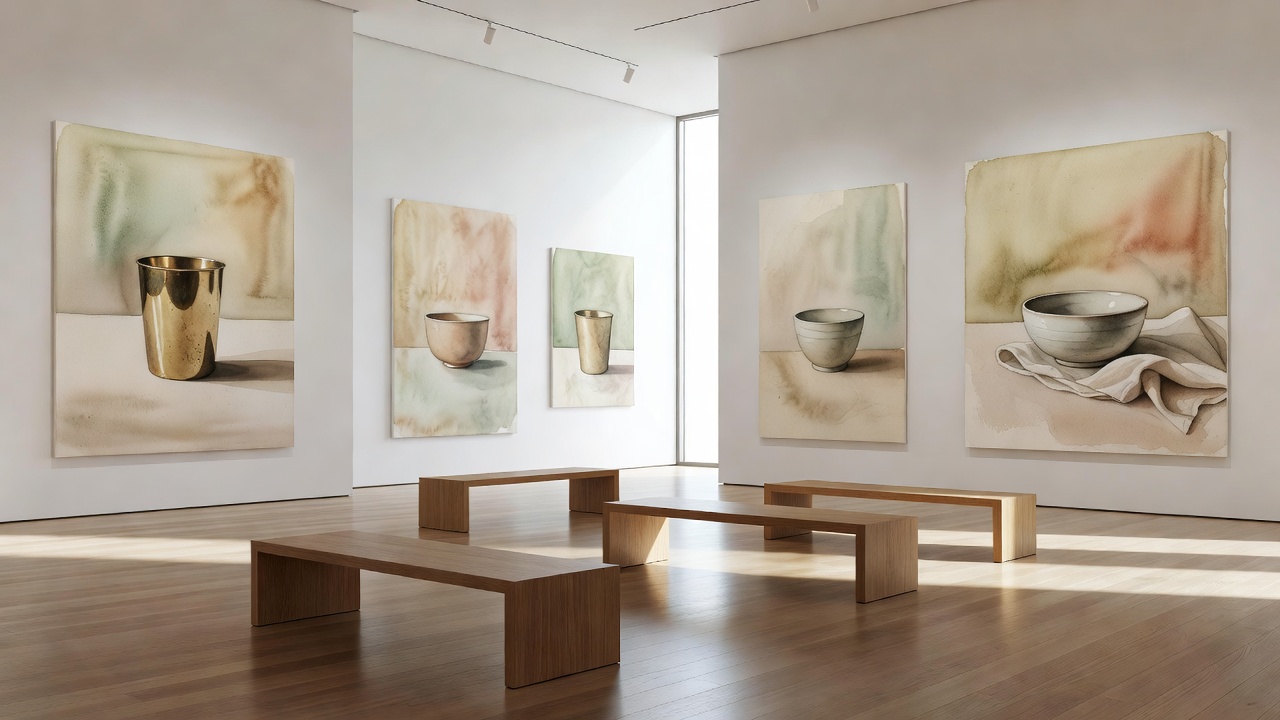


The presentation by Gallery Threshold at the CCA building included a major new body of paintings inspired by the seventh-century Tamil Shaivite saint Nandanar and the broader Nayanmar tradition of devotional poets. These works appear alongside pieces that reinterpret traditional stories, ancient manuscripts and the lives of Bhakti and Sufi figures through allegory to probe ideas of faith, identity and belonging. A parallel series of large-format watercolours shifts the focus to mundane objects from the artist’s home and studio such as a brass tumbler or the empty space around an item, creating an aura of sacredness without iconising the object itself, the gallery said in its announcement.
Ramesh, who maintains a studio in Visakhapatnam, told The Tribune that sacredness does not reside in the object but within the viewer. “I feel it is not the object itself. Sacredness lies within us,” he said. This perspective anchors the exhibition’s central question of what makes something sacred, with the empty space around depicted items playing a crucial role in evoking an aura, the newspaper reported on October 10. The artist has travelled visually from early portrayals of coastal fisherfolk to landscapes, saints and now intimate domestic scenes, a trajectory that has occupied him for nearly four decades.
The survey marks a comprehensive look at Ramesh’s output and is accompanied by a new monograph on his practice, according to the India Art Fair programme. It continues themes the painter first brought to prominence in exhibitions such as his 2017 solo at Gallery Threshold that reinterpreted episodes from the Ramayana in a contemporary light while drawing on memories of his grandmother reading the epic, a report from The Indian Express at the time stated. That show also featured works on women Bhakti poets including Lal Ded, Andal and Akka Mahadevi, demonstrating a consistency in his engagement with devotional traditions.
A review in Robb Report India described the heart of Sacred Spaces as a group of works inspired by Bhakti poets of the seventh and eighth centuries whose longing for the divine adopted the language of romance and bridal mysticism. Ramesh views devotion not as ritualistic but as a spirit of enquiry into life’s interconnectedness, the publication reported the artist saying. The exhibition, which opened on October 9, encouraged viewers to sit with the works and allow them to reveal their meanings gradually rather than seeking immediate explanations, the review added. Watercolour, once a medium Ramesh avoided, became central after his 2008 White Clouds exhibition where he began reworking paper through washing and screen-printing.
Gallery Threshold has hosted several of the artist’s previous solos. The current exhibition arrived as part of a busy October 2026 art calendar in Delhi that included multiple museum and gallery shows, a Sunday Guardian Live round-up from October 10 noted. Ramesh graduated from the Maharaja Sayajirao University of Baroda and has long examined the intersection of myth, memory and devotion in his paintings, profiles in The Hindu have shown. In a 2012 project he created a sanctum-like installation featuring four Bhakti women poets, that newspaper reported at the time.