


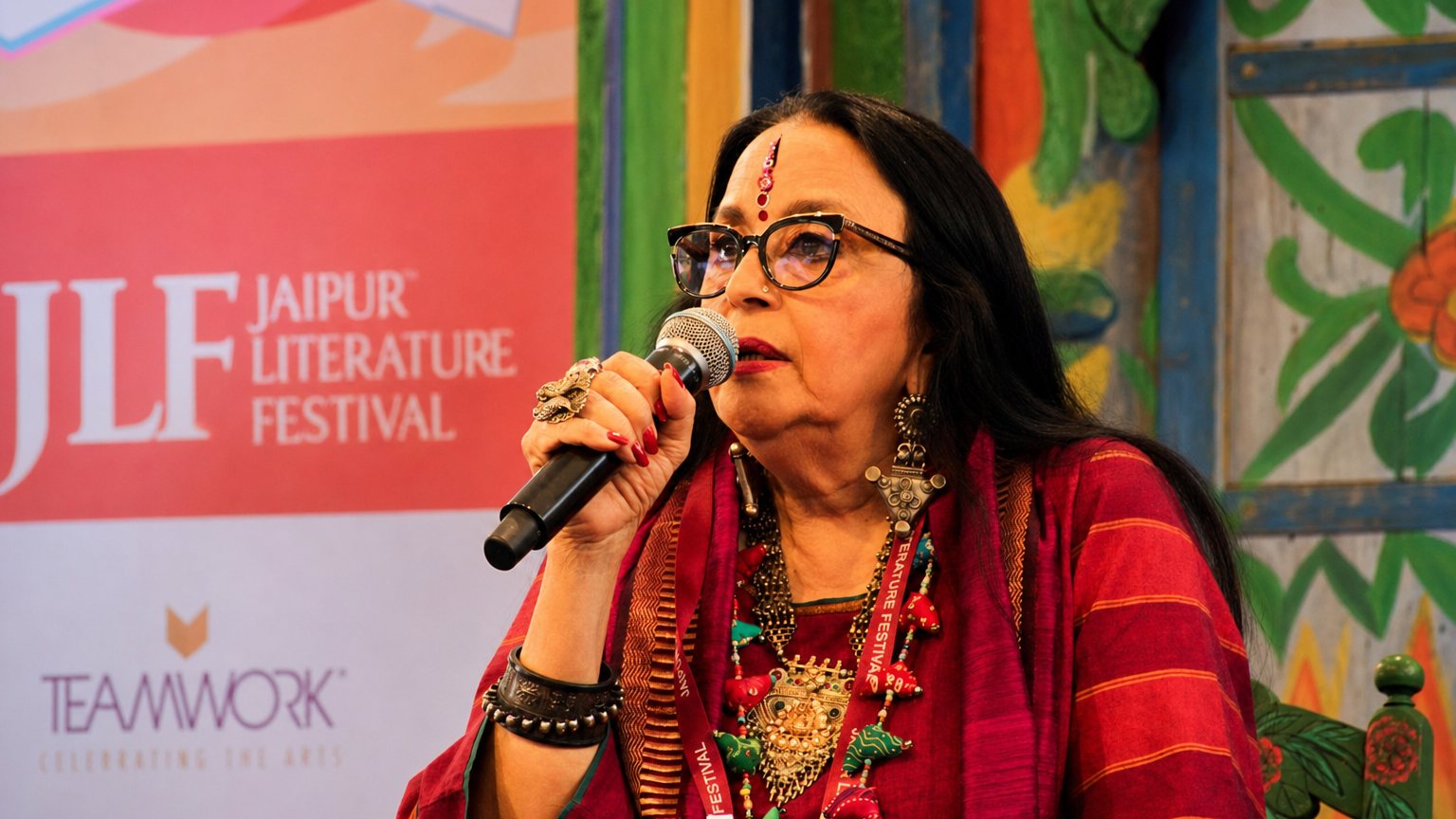


Acclaimed singer and actress Ila Arun shared insights on the enduring importance of cultural authenticity in a discussion with ET Edge Insights this month. The artist, known for her fusion of Rajasthani folk traditions with contemporary expressions, emphasised that remaining connected to one’s origins allows performers to resonate across generations. Arun, who grew up immersed in the folk music of Jodhpur, described how early exposure to communal singing during festivals shaped her artistic path, according to the publication. She has released multiple albums dedicated to folk music and continues to perform in both traditional and digital formats.
Arun told the outlet that all music traces its origins to folk forms, which she has made central to her own work over decades. The performer noted how technology has helped folk art reach international listeners without diminishing its core, stating verbatim, “Indian folk art can never go extinct, technology or no technology. In fact, with technology, it has gone international.” Her views come as Indian creators increasingly blend heritage elements with modern production techniques to capture younger viewers on platforms like OTT and social media. This approach has expanded her own reach, with one recent album collaboration garnering millions of views globally.
ET Edge Insights reported that Arun sees solitude and necessity as catalysts for creativity, drawing from her middle-class upbringing and adaptations to changing environments. The artist urged younger generations to participate actively in traditional festivals and wedding ceremonies, which serve as living repositories of folk knowledge. Such immersion, she argued, counters the tendency among some youth to favour convenience like DJ sets over extended traditional performances. Her comments align with a broader call for cultural continuity amid rapid societal shifts.
A Mint analysis of auction data showed India’s art market turnover climbed 87 percent to 3,041 crore rupees in 2025, driven largely by modern and contemporary works that often incorporate folk influences. Modern art sales rose an additional 43.7 percent in the first half of 2026, according to the Asign.art platform, though growth came more from higher prices than increased transaction volumes. These figures illustrate rising commercial interest in heritage-inspired pieces, a trend Arun has helped popularise through her signature style and collaborations. The market’s focus on established names underscores the premium placed on authentic roots in an evolving sector.
Arun reflected on her acting roles in projects like Aarya 3 and Haddi, where she revisited Rajasthani themes with contemporary twists, the publication noted. She has also lent her voice to initiatives such as the Rajasthan Royals anthem, extending folk energy into sports entertainment. Throughout her career, the artist has championed handloom attire and traditional jewellery as extensions of identity rather than fleeting trends. Her memoir details these experiences, reinforcing the message of staying grounded.
According to industry observers cited in related coverage, folk arts contribute significantly to cultural tourism and local economies across Rajasthan and Uttar Pradesh, though precise national aggregates remain under study by bodies like the Ministry of Culture. Arun’s work exemplifies successful adaptation, as she continues performing into her seventh decade without compromising her distinctive bindi and silver accessories that have inspired wider adoption of ethnic looks. The performer advised that artists must recognise their purpose and pursue it diligently, ensuring tradition informs innovation rather than yielding to it entirely.