



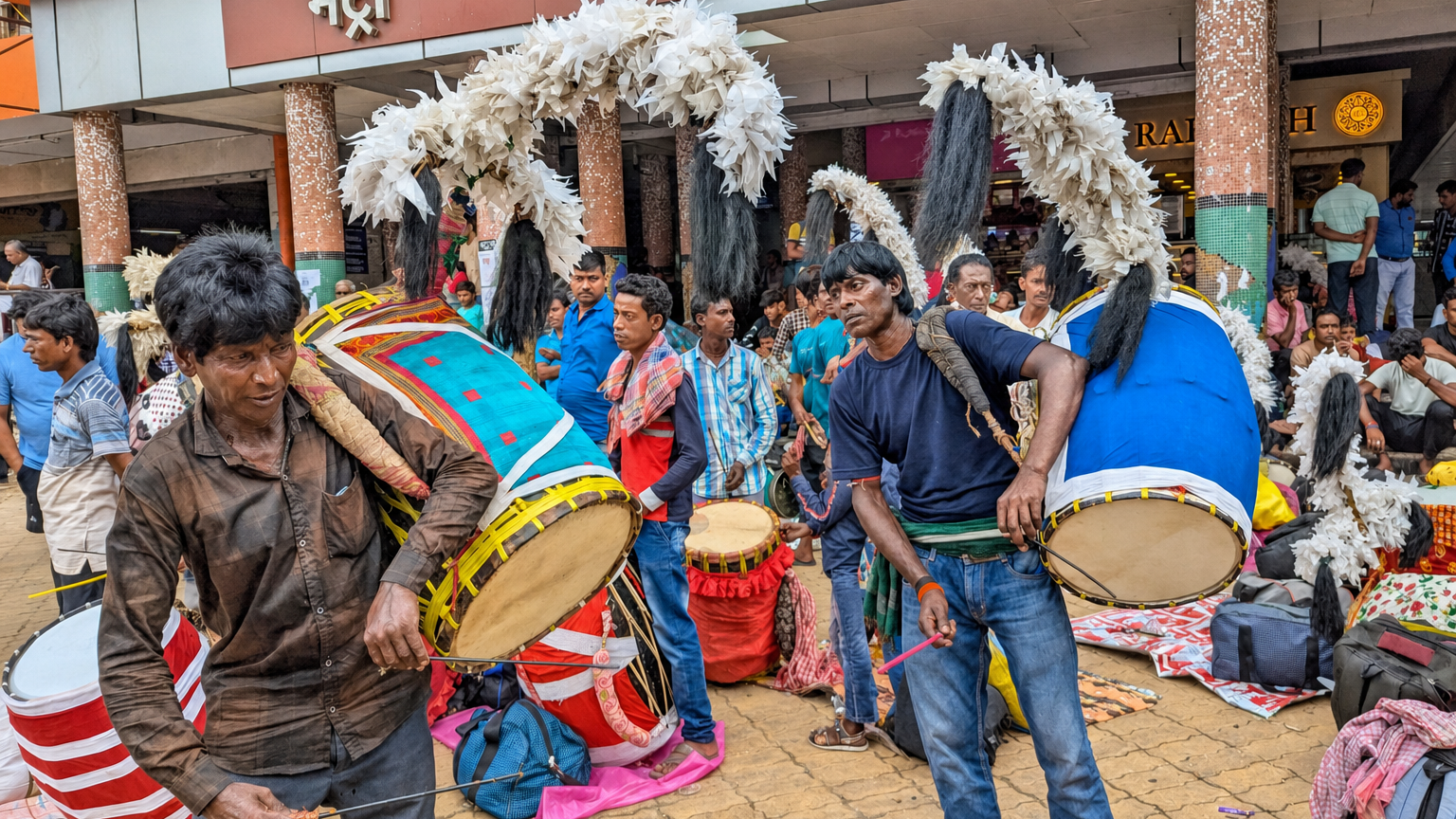


The Open Magazine feature Days Before the Dhak details how musicians known as dhaakis are converging on Kolkata and surrounding areas in the days leading to Durga Puja this month. These performers hail from villages across Murshidabad, Nadia, Birbhum and North 24-Parganas, where the tradition has been passed through generations. Their journeys often involve carrying large dhaks on their heads or bicycles, setting the stage for the festival’s distinctive soundscape that resonates through pandals and neighborhoods.
Historically the dhaak dates back nearly 3,000 years in the Indian subcontinent. Its name is thought to derive from the Dhak tree once used for the drum’s body though mango wood is more commonly employed today. Both ends of the hollow barrel are covered with stretched goat or cow hides fastened by thick leather straps creating distinct pitches for complex rhythms according to a t2online report on the instrument.[[1]](https://t2online.in/goodlife/lifestyle/the-heartbeat-of-durga-puja–why-the-dhaak-is-more-than-just-a-drum/2001227)
Gokul Chandra Das better known as Gokul Dhaki from Maslandapur became the first dhaaki to receive the Padma Shri award. He has led teams that include women performers who have joined in unison beats challenging longstanding conventions within the community. The instrument’s sound produces an immediate emotional reaction among listeners who associate the first notes with the arrival of Goddess Durga.
Dhaakis begin arriving weeks before the main festivities to participate in morning processions and evening rituals at pandals. The Open Magazine article describes how their beats echo through narrow lanes signaling the start of immersive celebrations for Bengali communities. This annual influx supports both cultural continuity and seasonal income for the rural artists who return home once the festival concludes.

In one noted performance Gokul Dhaki’s group of women dhaakis drew attention for their synchronized playing that shook the ground and drew respect from audiences. The development has helped address gender barriers while maintaining the art form’s integrity. Cultural observers note that such evolutions ensure the dhak remains relevant across changing social landscapes.
The tradition forms a core element of Durga Puja which draws millions of participants each year and generates significant economic activity in West Bengal. After the events dhaakis pack their instruments and depart quietly awaiting the next cycle a pattern that has endured for generations. Support from local authorities and cultural institutions has helped sustain these heritage practices amid modern pressures.