


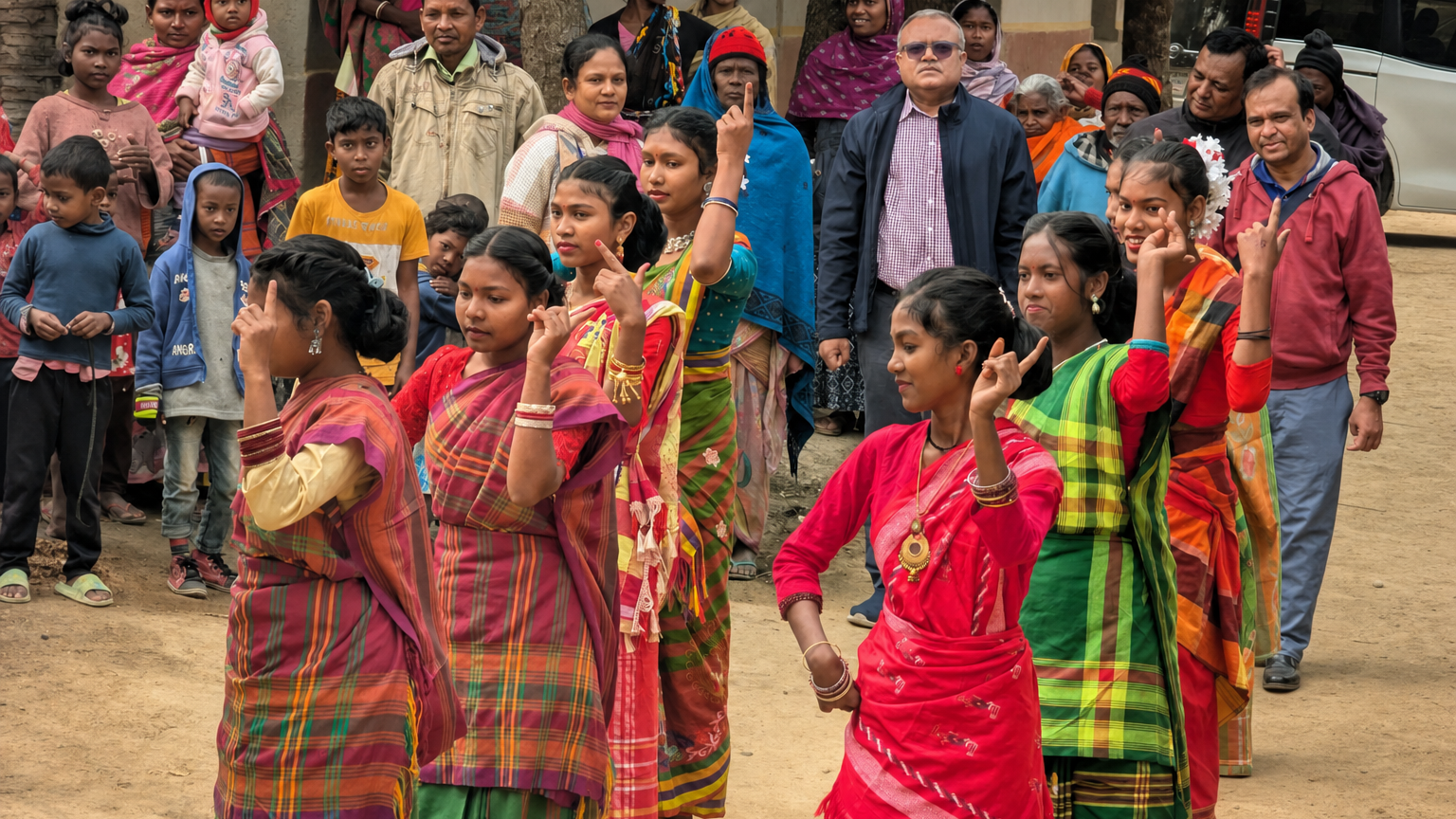


Thousands of people from indigenous communities across northern Bangladesh converged on the Golapganj High School ground in Birganj upazila of Dinajpur on October 23 for the traditional Bou Mela which has served for nearly two centuries as a venue for young men and women to find life partners. The event which coincided with the day after Bijoya Dashami of Durga Puja transformed the school grounds into a vibrant gathering that blended matchmaking traditions with broader cultural celebrations. Organizers from the Birganj Indigenous Social Development Association reported strong attendance that included not only Santal youths but also participants from Hindu and Muslim backgrounds underscoring the fair’s role in fostering inter-community bonds.[[1]](https://www.bangladeshpost.net/posts/dinajpur-s-200-yr-old-bride-fair-to-bring-young-indigenous-people-together-174605)
Local leaders said young Santal women arrived dressed in colorful traditional sarees with bangles and bindis while men wore new attire as they engaged in conversations that could lead to family approvals and subsequent marriages accompanied by the sounds of traditional sanai flutes. The fair also featured solo dances cultural performances to the rhythms of madal and dhamsa drums and a discussion meeting that highlighted the preservation of indigenous customs. Joseph Hemrom president of the Adibashi Somaj Unnoyon Parishad who chaired the discussion told reporters that the event now known additionally as Milon Mela draws visitors from districts including Panchagarh Thakurgaon Nilphamari Joypurhat and Naogaon with estimates exceeding 30,000 attendees in recent years.[[2]](https://www.jugantor.com/country-news/1173249)
The tradition which dates back approximately 200 years originated within the Santal community as a primary space for youths to select partners with mutual consent often resulting in swift family-arranged weddings that reinforced social networks. Over time the fair has evolved beyond its original matchmaking focus becoming a wider festival of togetherness as modernization has reduced the frequency of on-site partner selections according to accounts from the Dinajpur District Indigenous Forum. Ganesh Soren president of the forum noted that while the core spirit remains the gathering now emphasizes cultural exchange and community harmony across ethnic lines.[[3]](https://www.bssnews.net/district/317763)
Bangladesh is home to more than 50 indigenous ethnic groups many concentrated in the northern plains where the Santals represent one of the larger communities maintaining distinct languages dances and social practices amid the country’s diverse demographic landscape. Data from government assessments place the indigenous population at around 1.8 percent of the national total with groups in Dinajpur and surrounding areas actively working to sustain their heritage through events like the Bou Mela. Julhas Mardi general secretary of the Birganj upazila indigenous organization said such fairs play a vital role in passing traditions to younger generations while adapting to contemporary social realities.[[1]](https://www.bangladeshpost.net/posts/dinajpur-s-200-yr-old-bride-fair-to-bring-young-indigenous-people-together-174605)
This year’s edition was jointly organized by the Nijpara and Mohanpur union parishads along with the Birganj Indigenous Social Development Association incorporating elements that promote both cultural continuity and social cohesion. The discussion session addressed ways to balance heritage preservation with modern influences including the declining but not entirely vanished practice of fair-based marriages. Participants and organizers alike pointed to the event’s contribution to regional harmony as people from varied backgrounds mingled in an atmosphere of music dance and shared festivities.[[3]](https://www.bssnews.net/district/317763)
As one of the longstanding fairs in northern Bangladesh the Bou Mela continues to attract attention for its unique position at the intersection of personal connections and collective identity. Local indigenous bodies have stressed the importance of such platforms in a time when many traditional practices face pressures from urbanization and changing lifestyles. The fair’s dual identity as both a potential marriage venue and a cultural showcase ensures its relevance for communities seeking to maintain their distinct identities within the broader national fabric.