




Florentina Holzinger has turned the Austrian pavilion at the Venice Biennale into an ongoing live installation that reimagines the city as a flooded dystopia drawing on the 1995 film Waterworld while incorporating body horror elements. The work which runs through Nov. 22 functions simultaneously as an underwater theme park a sewage treatment facility and a sacred space where performers rely on technological extensions for survival according to the curator Nora-Swantje Almes. Almes stated that the piece addresses Venice’s vulnerability to rising sea levels and noted we think about Venice as a city that is particularly threatened by the climate crisis and flooding at the same time that we’re critical of it we’re also part of it we are complicit as are the visitors to the Biennale. The exhibition which The Art Newspaper previewed in May has since been named one of the standout presentations of the 61st edition attracting long visitor queues daily.
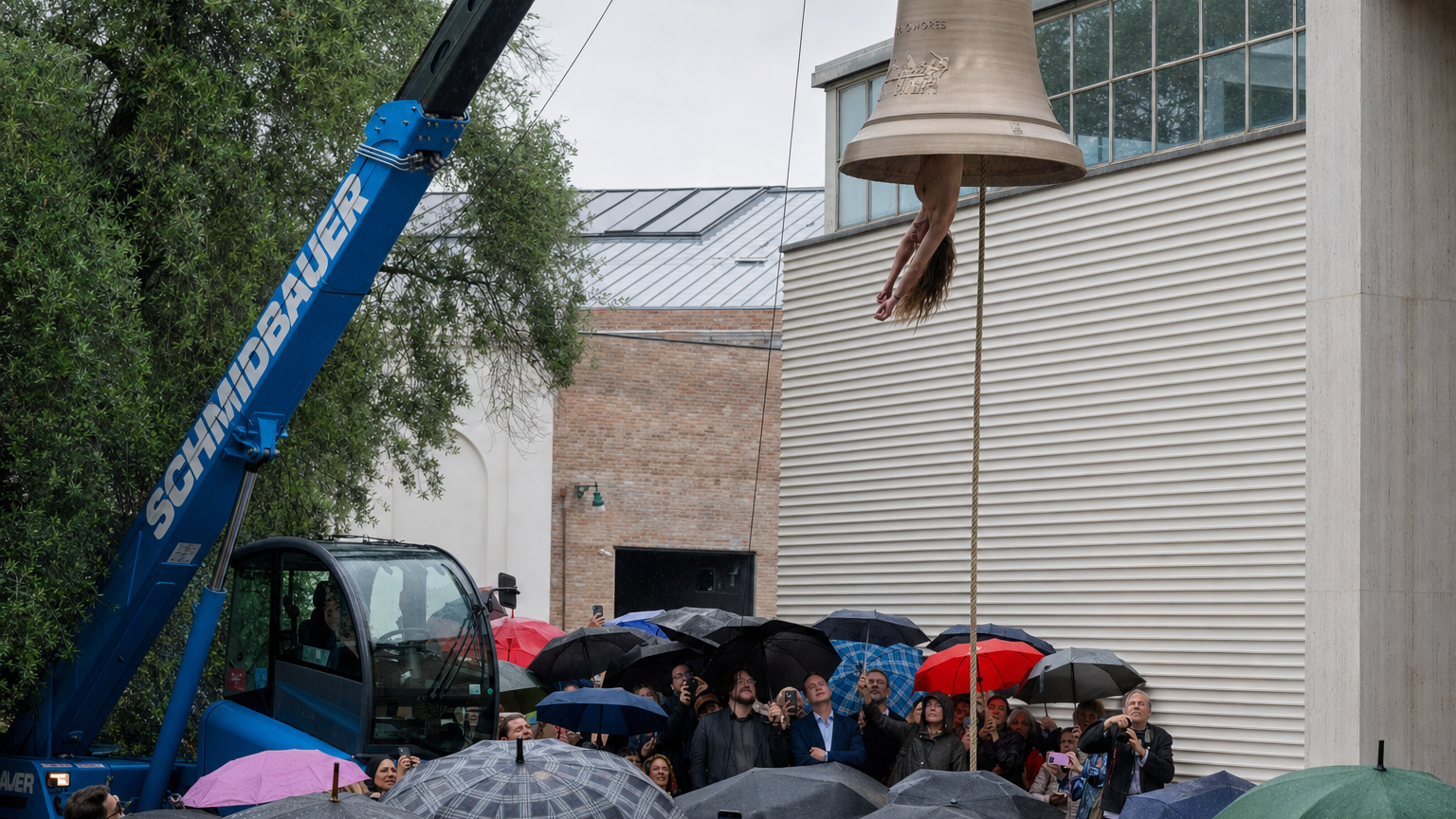
Performers appear naked throughout the pavilion driving jet skis in circles scuba diving in a tank fed by two urinals connected to a NASA-grade filtration system and using their bodies as clappers in a giant bell that was retrieved from the lagoon. One performer resides continuously in a water tank in the courtyard sustained by visitors’ urine which also contributes to the progressive flooding of the space a detail reported across multiple reviews including those in The New York Times. Holzinger who sometimes takes on the demanding bell-clapping role herself has built the work around the idea that in our scenario the body can only be there with this technological extension Almes told The Art Newspaper. These actions strip away romanticised notions of the body referencing Giorgione’s Sleeping Venus painted in Venice in 1510 according to the project’s curatorial notes.
The 40-year-old Vienna-born artist known for provocative feminist performances involving roller-skating nuns and live body modification has long explored water as a central theme in pieces such as Ophelia’s Got Talent. For Seaworld Venice she collaborated with a team of performers musicians stunt coordinators and producers to create a machinic organism where action and consequences are continuously negotiated as described on the official Austrian pavilion website. The installation builds on her Etudes series of public performative actions that marked the opening and will close the Biennale presentation with site-specific events in the Venice lagoon. TIME magazine included Holzinger on its 2026 TIME100 Art list in September citing the work’s ability to cause a stir at an event known for provocation.
Venice’s precarious relationship with water provided the ideal context for Holzinger’s ongoing fascination with the element which here collides nature technology and mythological water creatures. The Austrian pavilion originally designed as a rationalist temple of art by Josef Hoffmann was flooded within the exhibition to foreshadow the city’s potential future submersion according to The Brooklyn Rail. Curator Almes framed the piece as a reflection on technological paranoia climate anxiety and the uneven global order where vulnerable populations bear the brunt of environmental waste. The work has prompted visitors to confront their own contributions to such systems through the urine-recycling mechanism that sustains the live performance.
Following its run at the Biennale which closes on Nov. 22 an adapted version of Seaworld Venice will travel to Gropius Bau in Berlin in spring 2027 then to Kunsthalle Wien in fall 2027 before concluding at Amant in Brooklyn in March 2028 as confirmed by ARTnews. The tour will occupy multiple spaces at Amant including its outdoor lot and feature intermittent live performances. Holzinger’s presentation has been praised by the selection jury for combining dance theatre and performance art while raising urgent questions about water as a resource bodily experiences and societal norms. The Austrian government arts website noted that the interdisciplinary approach allows visitors to participate at different levels across the pavilion installation and lagoon Etudes.
The 61st Venice Biennale overall has drawn record attendance with Holzinger’s pavilion emerging as one of its most discussed elements amid broader conversations on ecological collapse and feminist resistance in contemporary art. Reviews in outlets such as Arte Al Dia have highlighted how the work stages both ecological and social breakdown through its closed-loop systems. Performers’ continuous presence for seven months underscores the endurance required in the depicted future where dry land has vanished and sewage integrates into daily life. This scale of commitment has amplified the installation’s impact on audiences navigating the Giardini della Biennale site.