

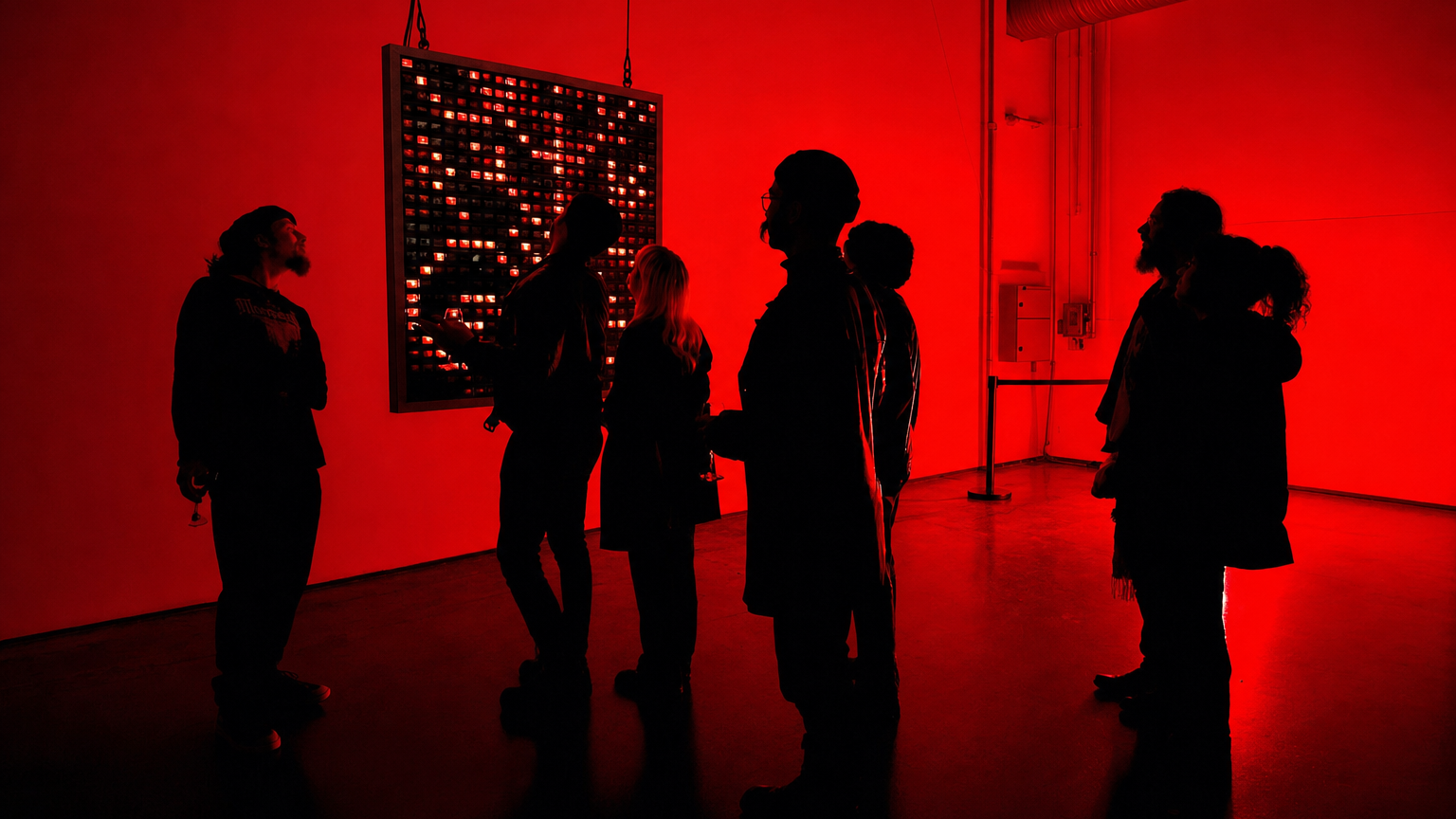


The Oulu2026 organisation has released details for the fifth FLASH Light Art Biennial, which is scheduled to run from November 7 to 22, 2026. The event titled Veiled Light will present works by 13 artists at four venues that include AaltoSiilo, Galleria MABD, Pikisaari and the façade of Oulu Central Library Saari. An accompanying FLASH Seminar will create a platform for discussion on darkness and the role of light art in urban environments. The main language of the event is English, with participation offered both on-site and via live stream.
According to the Oulu2026 announcement, the biennial builds its theme around the northern cycle of light and darkness from a Nordic perspective. Curator Kaarne stated that as the darkness of November settles over the natural world, we may find ourselves drifting into a dreamlike state of mind. Kaarne added that in Baltic Finnic traditions this period marks a turning point in the cycle between life and death, light and darkness, and this world and the next, described as a time between times to which human experience is connected through symbolic gestures and rituals.
The Oulu2026 assessment found that the shifting boundary between the seasons of light and darkness emerges as a spiritual and transformative in-between state capable of altering perception. Kaarne noted that within this liminal space the visible and invisible, the finite and infinite, and the past, present and future begin to merge. This opens a possibility to encounter what often remains hidden from conscious awareness, including our own inner light.
Open Magazine’s feature titled Life between Light and Shade examines similar artistic explorations of illumination, obscurity and the spaces between them across various cultural settings. The article highlights how photographers and mixed-media practitioners have long engaged with these dualities to probe identity, form and philosophical questions. Its perspective adds depth to the biennial’s emphasis on the fragile state between light and darkness in a Nordic winter context.
The Oulu2026 organisation indicated that the biennial forms part of the city’s preparations as a European Capital of Culture. Previous editions of the FLASH Light Art Biennial have positioned Oulu as a centre for light-based installations that respond to regional environmental conditions. The 2026 program extends that trajectory by integrating exhibition spaces with seminar programming focused on urban applications of light art.
Exhibition venues were selected for their capacity to showcase interactions between artworks and the local light cycles, the Oulu2026 group reported. Curatorial choices centre on works that treat the boundary between light and darkness as a site of spiritual and perceptual transition. The event is expected to draw audiences interested in both artistic innovation and the cultural traditions tied to seasonal change in the region.