

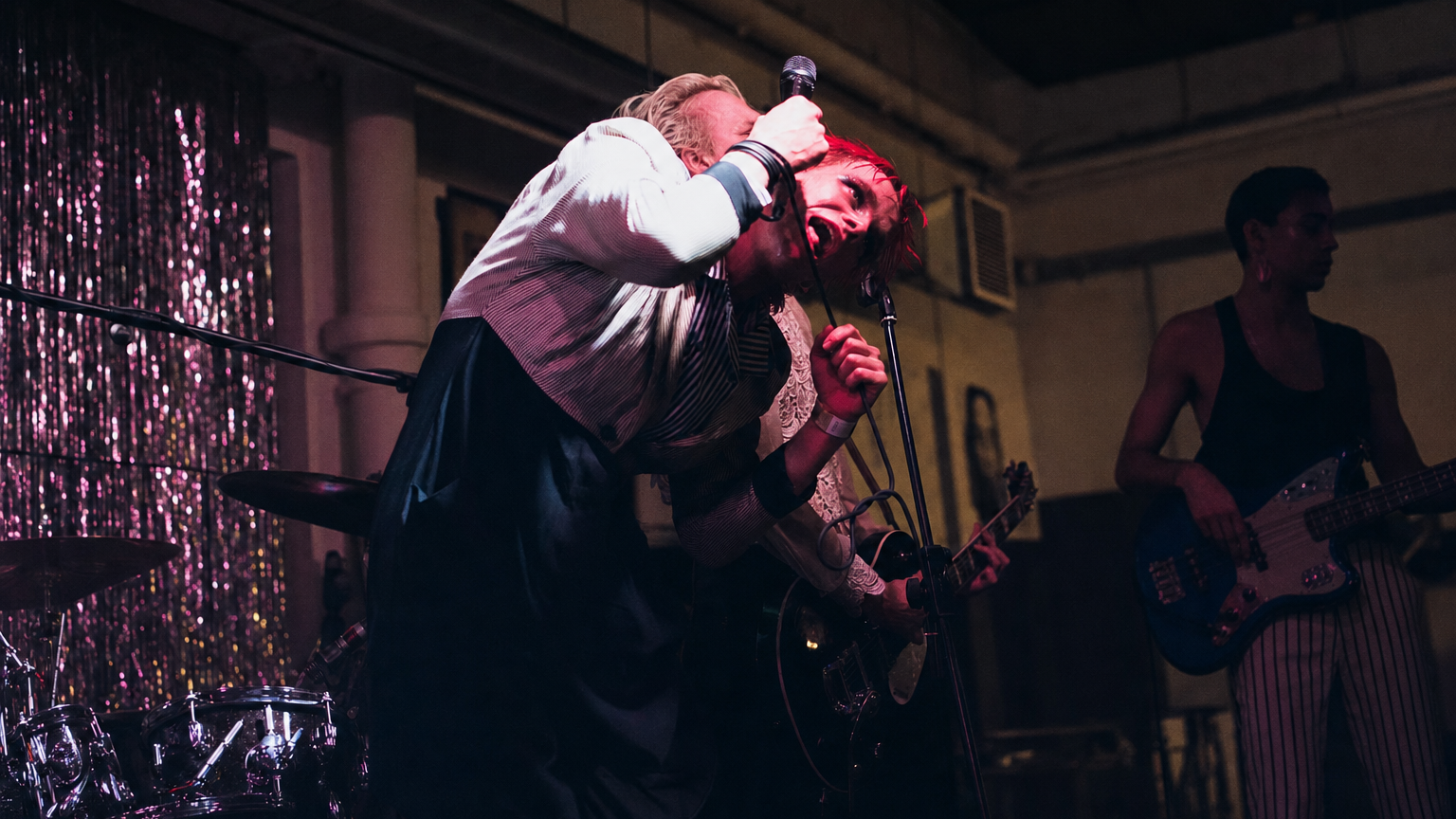


Art-rock band HMLTD outlined its opposition to cultural conformity in a new interview with NME this week, where frontman Henry Spychalski highlighted the damaging effects of social media platforms. Spychalski stated that Instagram is destroying culture more than we realise. The comments form part of a broader artistic stance the London-based collective has maintained since its formation, blending glam, punk and experimental elements to challenge audiences.
NME reported that the band’s approach draws on outsider pop traditions to foster reactions of either revulsion or delight from listeners rather than indifference. Spychalski told the publication the group seeks to create an inclusive community for those who do not fit conventional standards. This philosophy has guided HMLTD through early singles such as Is This What You Wanted and To The Door, which established its reputation for sensory-overload live events.
The Pit Standard review of the group’s 2026 album FANGS described its use of vampire mythology as a metaphor for a society consumed by endless pursuit of approval via social media and productivity. The album marks a return to confrontational experimentation with electronic production after the orchestral scale of 2023’s The Worm. According to the review, tracks like I Used To Ride In Limousines capture the tension between physical energy on the dancefloor and underlying feelings of depletion.
A conversation with The Needle Drop published in October 2026 found Spychalski linking hyper-capitalism, generative AI and blurred lines between fans and artists to a looming collapse of fan culture. He noted that increased ease of releasing music has democratised the process but also flooded the market with economic content rather than meaningful art. The discussion tied these trends to a wider spiritual and creative crisis in Western society that HMLTD aims to address through its work.
HMLTD’s history includes signing with a major label before parting ways and self-releasing material that critiques late capitalism and toxic masculinity. An earlier NME feature from 2019 detailed how the band viewed its glam aesthetic as a rebellion against standard gender norms and categorisation. Spychalski has consistently positioned the project as a voice for outsiders, a theme that resonates in its current output amid ongoing debates over technology’s role in cultural production.
Industry observers have noted parallels between HMLTD’s warnings and broader concerns about social media’s influence on creativity across the art and music sectors. The band’s forthcoming appearances build on past festival slots, including performances at End Of The Road, where it presented immersive sets aligned with its anti-conformity message. Data from music market analyses indicate that platforms like Instagram now drive a significant portion of artist discovery, a development that Spychalski suggested requires greater scrutiny.