



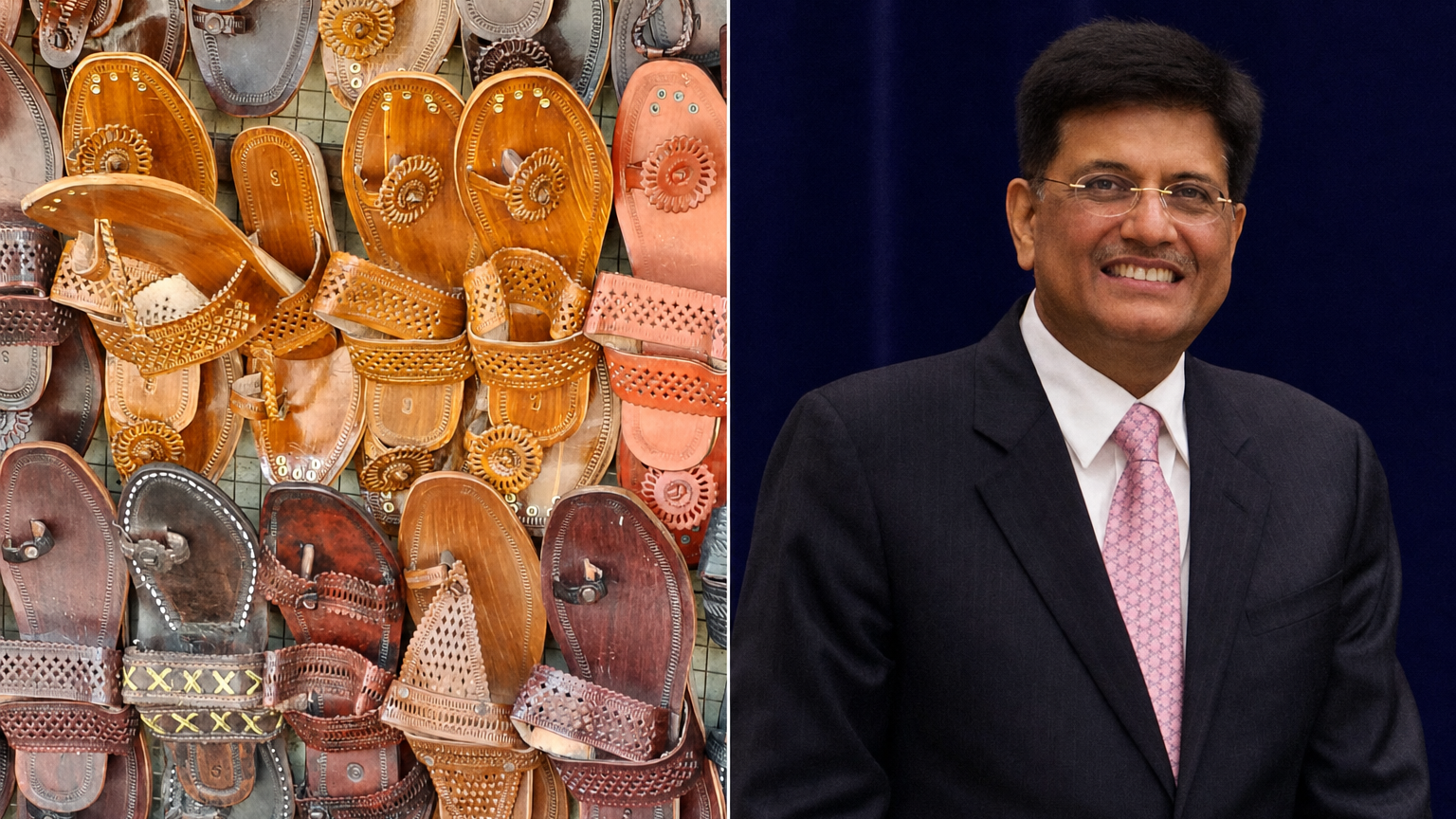


Speaking at a gathering in Delhi, Piyush Goyal recalled the government’s intervention after Italian luxury brand Prada featured designs similar to traditional Kolhapuri footwear. The Hindustan Times reported that the commerce minister described how an objection filed through the copyright office compelled Prada to negotiate with local shoemakers. The resulting understanding delivered commercial advantages to the artisans involved, Goyal added in his address.
The episode began in June 2025 when Prada displayed open-toe leather sandals at a Milan fashion show that closely resembled Kolhapuri chappals, a craft granted Geographical Indication status in 2019 by Indian authorities. The presentation drew accusations of cultural appropriation and prompted legal action along with demands for proper attribution from artisan communities in Maharashtra and Karnataka. Prada later entered agreements with LIDCOM in Maharashtra and LIDKAR in Karnataka, both government-supported leather industry development corporations.
Subsequent developments included visits by Prada technical teams to Kolhapur workshops, where they examined production methods, materials and quality standards used by local craftsmen. Artisans reported a noticeable uptick in inquiries and orders from overseas buyers in markets such as the United States, Qatar and Dubai following the heightened international attention. One Kolhapur seller observed that the dispute, though initially contentious, expanded awareness of the centuries-old tradition and its handmade quality.
A Press Information Bureau compilation of Ministry of Textiles data shows handicrafts exports excluding handmade carpets rose 6.1 percent to Rs 15,855 crore in fiscal 2025-26 from the prior year. Overall textile and apparel exports including handicrafts reached Rs 325,339 crore in the same period, reflecting steady expansion across more than 100 countries. The Export Promotion Council for Handicrafts has noted consistent year-on-year growth in the sector, which benefits from GI protection on products like Kolhapuri chappals.
Goyal stressed that India’s global presence in such areas remains limited and encouraged a more outward orientation toward handicrafts, handlooms, history and traditions. Greater international exposure would generate economic opportunities for artisans while enhancing the country’s cultural profile, he argued. The minister framed the Prada case as evidence that proactive engagement can convert challenges into tangible benefits for local producers.
The minister additionally pressed young entrepreneurs to look past domestic sales and construct businesses capable of competing on the global stage. Such an approach would drive India’s next phase of economic growth, Goyal stated at the event. His comments underscored ongoing policy efforts to pair cultural preservation with expanded export strategies for traditional crafts.