
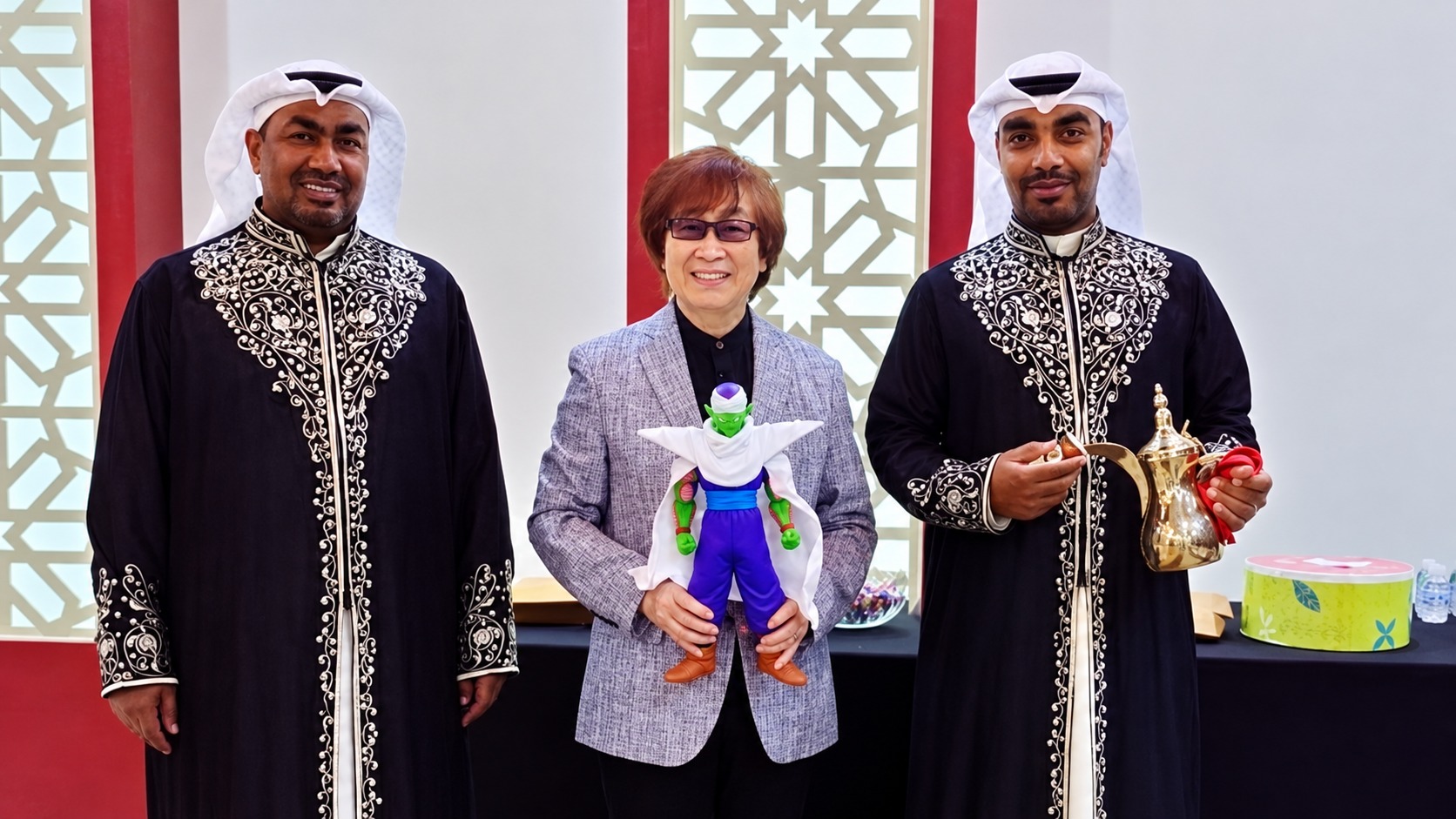


The November convention brings gaming, anime and cosplay together, with the work of local makers offering a story beyond the visiting guests.
A pop-culture convention turns an audience into something more visible than an online following. Fans arrive in costumes they have made, illustrators put their work on tables, and performers whose voices are familiar from games or animation meet the people who know those characters. The attraction is partly recognition, but it is also participation.
Quantum Con’s latest ticketing information lists its Kuwait event for 5–7 November 2026 at Kuwait International Fairgrounds, Hall 5. The programme brings anime, gaming and cosplay together in one physical venue, with exhibition entry and certain additional experiences treated separately.
For Kuwait, the more substantial story is what happens around the headline appearances. A convention creates a temporary meeting place for interests that often develop through screens: drawing, costume construction, collecting, performance and game culture. These activities do not all amount to businesses, but they involve skills and original work that deserve attention in their own right.

Fans contribute to the event itself
The organiser’s website presents cosplay, gaming and encounters with performers as parts of the convention format. Those activities give visitors different roles. Someone watching a stage appearance is an audience member; someone presenting a costume is also contributing to what other visitors come to see.
Cosplay illustrates the distinction particularly clearly. A recognisable character is the starting point, but translating that character into clothing, props and movement requires choices about materials and presentation. The result is both a reference to an existing fictional world and a physical object assembled for a real setting.
The work behind a costume often remains invisible in a photograph of a crowded hall. How was a difficult shape constructed? Which elements were handmade? What changed between a first version and the finished piece? Such questions describe effort and technique without assuming every participant is pursuing a commercial career.
Gaming contributes a different form of participation. Playing, watching a competition and meeting the people behind a game are related but separate experiences. A convention can place them near one another without turning every visitor into an esports competitor or every game-related activity into a tournament.
The creative economy is bigger than celebrity visits
There is a wider economic context, although it needs careful handling. UN Trade and Development’s Creative Economy Outlook 2024 reported global creative-services exports of $1.4 trillion in 2022. Creative goods accounted for a separate $713 billion. These are worldwide trade measures, not an estimate of Kuwait’s convention market.
The figures nevertheless show why drawing, design, animation and related services are legitimate economic subjects. They sit within industries that produce and exchange intellectual and creative work. The presence of fans at a convention cannot establish the size of those industries locally, but it provides a place to ask more specific questions about the people making things.

For a Kuwaiti illustrator, that might mean explaining an original character or the process behind a print. For a costume maker, it might involve a commission and the hours required to complete it. For a small exhibitor, it might concern the difference between selling an object and building an audience for future work.
The scale of these activities still needs to be understood carefully. A busy event does not automatically prove a thriving export sector. Conversely, a small creative business does not need global scale before its work becomes worth examining. Individual practices are most informative when described accurately rather than absorbed into an unsupported market-growth claim.
Physical gatherings change the conversation
Digital distribution allows creative work to travel widely, but it does not make every interaction equivalent. At a physical event, a visitor can examine the finish of a prop or print, ask its maker a question and compare different approaches in the same room. These are features of the format, rather than guaranteed commercial outcomes.
UNCTAD’s analysis of digitalisation in the creative economy describes how technology is reshaping production and distribution, while also raising questions about competition and intellectual property. The relationship between an online audience and a physical gathering belongs within that wider discussion.
Original work and fan work also need to be distinguished. A character created by a local artist is different from an interpretation of a globally owned franchise. Both can appear within fan culture, but the origin of the underlying character remains relevant when discussing authorship and commercial activity.
For visitors, the distinction can enrich the experience. Recognising a familiar fictional figure may bring someone to a display. Discovering an artist’s own work gives that encounter another dimension. The local creative contribution becomes easier to see when a display identifies who made what.
What the November programme needs to make clear
The current ticketing page separates entry from a listed meet-and-greet experience. That distinction matters to anyone assessing the full cost of a visit. The same page retains some older event wording, so its current November dates and the organiser’s latest announcements should be checked together before making specific attendance plans.
The organiser’s Instagram account is another source of programme updates. Historical guest listings on the main website should not be treated as confirmation that those performers will attend the November 2026 edition. A recognisable name from an earlier event is not a current booking.
Once the doors open, the event’s local character will emerge beyond the main stage. The costumes, drawings, props and small displays will show how people in Kuwait interpret the stories they follow. That is where a convention becomes a record of local creative participation, as well as a place to meet visiting guests.